GET A FREE CONSULTATION
(702) 680-1111

Founding Member & Managing Partner at Gina Corena & Associates
Practice Areas: Personal Injury

Driving alongside large commercial trucks can be intimidating, especially when you realize how easily your car can vanish into a truck’s blind spot. These blind spot truck crashes in Nevada happen far more often than most drivers expect, leading to serious injuries on major freeways like I-15, I-80, and US-95.
This guide breaks down everything Nevada drivers need to know about truck blind spots, what makes local freeways particularly hazardous, and how Las Vegas truck accident attorneys approach these complex cases to help victims recover after serious collisions. Keep reading to learn how blind spot crashes happen, who may be liable, and what steps to take if you’re ever involved in one.
Truck blind spots, often referred to as “no-zones,” are areas around large commercial vehicles where smaller cars are invisible to the truck driver. These areas can hide entire vehicles, creating high-risk conditions during lane changes, merging, or freeway turns.
There are four major blind spots around a semi-truck:
The size and height of a semi-truck make these blind spots unavoidable. Even with side mirrors and modern technology, visibility remains limited. When a passenger car lingers in these zones, the chances of a truck blind spot accident rise dramatically.
“More than one-third of all crashes between large trucks and passenger vehicles occur in a blind spot area, according to the Federal Motor Carrier Safety Administration (FMCSA).”
Nevada’s freeways are key trucking routes connecting California, Utah, and Arizona. The constant movement of freight traffic through I-15, I-80, and US-95 means the state sees heavier truck volumes than most regions.
High speeds, long hauls, and fatigue combine to create dangerous situations. Truckers often change lanes quickly to maintain their schedules, while local drivers, many of whom are tourists unfamiliar with freeway merging patterns, unintentionally drive in no-zones.
The mix of long-haul routes, harsh weather, and urban congestion in Las Vegas and Reno increases the likelihood of freeway lane-change accidents. Even a brief lapse in judgment can lead to devastating blind spot truck crashes in Nevada.
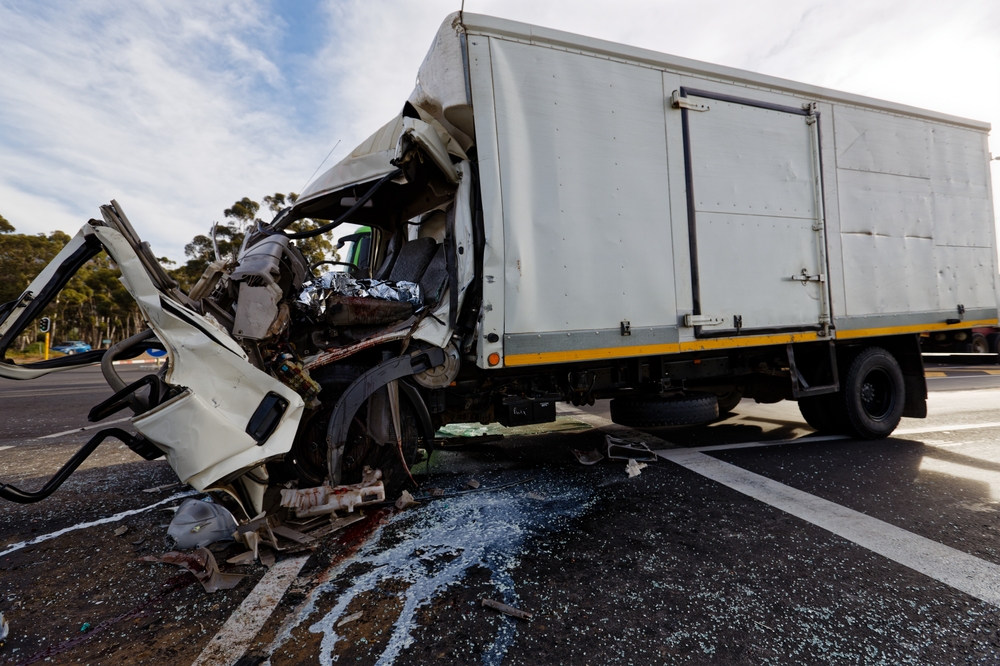
Blind spot collisions rarely happen because of a single mistake. They’re usually a chain of minor errors that align at the wrong moment. One major cause is the negligence of truck drivers. Many accidents occur when drivers fail to check mirrors, rely only on blind spot sensors, or make unsafe lane changes without signaling. Fatigue from long shifts or distraction from in-cab devices also plays a role.
Passenger car drivers contribute too, often by cruising alongside a trailer or cutting too close after overtaking a truck. Other common factors include poor weather visibility, uneven lighting on rural highways, or improper mirror calibration.
The result is often the same severe side-swipe or underride collisions that cause significant injuries and property damage.
Proving fault in a blind spot truck crash requires a careful look at how the accident occurred and who failed to act reasonably. Nevada follows the rule of comparative negligence under NRS 41.141. This means an injured person can still recover compensation if they are less than 50% responsible for the crash.
Potentially liable parties may include:
Federal regulations also influence these cases. Under FMCSA 49 CFR §392.2, commercial drivers must operate safely and obey all traffic laws. Additionally, 49 CFR §393.80 requires every truck to have proper rear-vision mirrors.
Understanding these laws helps victims pursue rightful claims when trucking company liability or driver negligence is involved.
After any truck accident, quick action helps preserve evidence and strengthen your case. Move to safety and call 911 immediately. Take photos of the vehicles, road conditions, and any visible injuries. Gather names of witnesses and record license plate numbers.
Collect dashcam footage or video from nearby surveillance cameras. These can help show if the truck merged into your lane without signaling. Seek prompt medical attention, even if you feel fine; some injuries may not surface for hours.
Once you’ve ensured your safety, contact a Nevada truck accident lawyer who can secure the truck’s black box data, electronic logs, and maintenance reports before they’re erased or altered.

Many blind spot truck accidents can be avoided with awareness and patience. Drivers should avoid lingering in no-zones and always ensure they can see the truck’s mirrors. If you can’t see the Driver, they can’t see you.
Keep a longer following distance to give the truck room to maneuver. Never cut sharply in front of a commercial vehicle, and pass quickly but safely.
Technology is also improving safety. Modern blind spot detection systems and side cameras help truckers reduce the risks associated with no-zones. Public awareness programs from the Nevada Department of Transportation (NDOT) emphasize driver education, which you can read more about at nevadadot.com/safety.
“Commercial trucks can have blind spots extending up to 30 feet behind and 20 feet along the right side, enough to conceal an entire vehicle.”
| Truck Blind Spot Zone |
Location |
Visibility Risk |
Recommended Safety Tip |
| Front (10–20 ft) | Directly ahead of cab | Driver cannot see small cars close ahead | Leave extra space when merging |
| Rear (up to 30 ft) | Behind trailer | Total invisibility for cars | Keep safe following distance |
| Left Side | Behind driver’s door | Partial mirror coverage | Avoid long stays beside truck |
| Right Side | Full length of trailer | Largest no-zone | Pass quickly, never linger |
A no-zone is a truck’s blind spot where smaller vehicles are invisible, making lane changes or merging hazardously.
Truck drivers, employers, or manufacturers may share fault depending on evidence such as driver logs and mirror compliance.
Yes. You can recover compensation if you are less than 50% responsible under Nevada’s comparative negligence rule.
Dashcam videos, witness accounts, ELD data, and maintenance records are key to proving negligence.
Victims typically have two years from the date of the accident to file a personal injury claim.
Blind spot accidents continue to be a serious issue on Nevada’s busy highways. The combination of high truck traffic, fatigue, and visibility limits creates conditions ripe for collisions. Staying alert, understanding truck no-zones, and maintaining safe distances can prevent many of these crashes.
If you’ve been involved in a blind spot truck crash in Nevada, getting guidance from an experienced Las Vegas personal injury attorney can make all the difference. Skilled legal professionals can help you understand your rights, gather the proper evidence, and pursue full and fair compensation for your injuries and losses.
You don’t have to face this process alone. Schedule a free consultation today with a trusted Las Vegas attorney to discuss your case and learn about your legal options.

As founder of Gina Corena & Associates, she is dedicated to fighting for the rights of the people who suffer life-changing personal injuries in car, truck and motorcycle accidents as well as other types of personal injury. Gina feels fortunate to serve the Nevada community and hold wrongdoers accountable for their harm to her clients.