GET A FREE CONSULTATION
(702) 680-1111

Founding Member & Managing Partner at Gina Corena & Associates
Practice Areas: Personal Injury
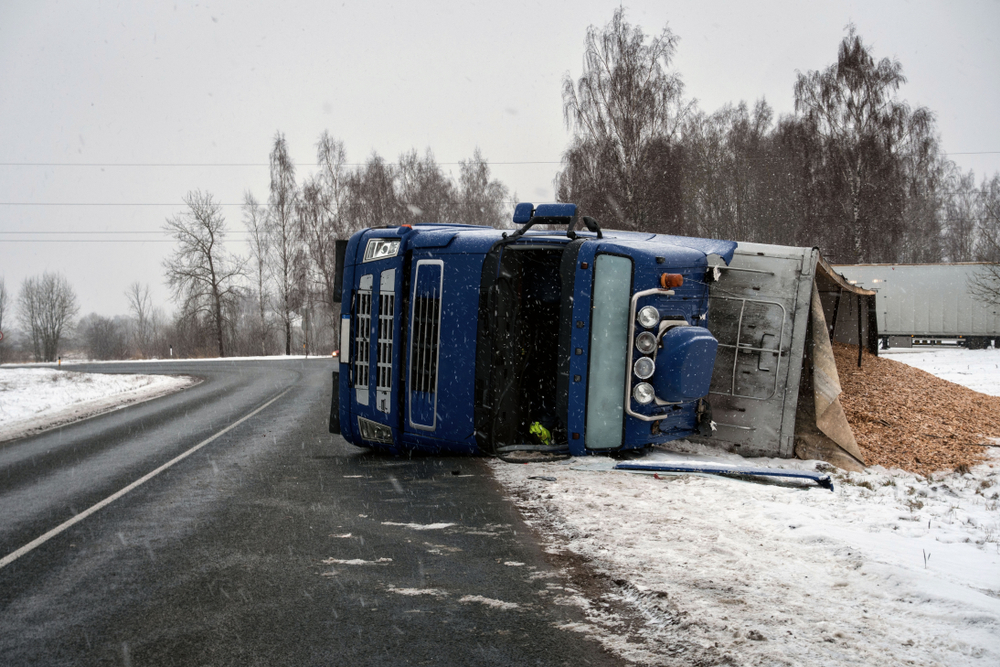
Trucking plays a significant role in Nevada’s economy, especially around Las Vegas, where commercial trucks travel daily across busy interstates and industrial routes. But not every truck crash is caused by speeding or fatigue. Many serious collisions begin long before the driver hits the road when the cargo inside the trailer is loaded incorrectly.
A Las Vegas truck accident lawyer often sees cases like these, where a simple cargo load error leads to a rollover, jackknife, or cargo spill that injures multiple people. This guide explains what cargo load errors are, how they cause accidents, and what victims should know about liability under federal and Nevada laws.
A cargo load error happens when freight in a truck is not correctly distributed, secured, or inspected before transport. These errors include uneven weight, unsecured freight, and failure to follow safety inspections required under 49 CFR § 392.9.
Common causes include overloading, improper tie-downs, or skipping inspections. Even a small mistake can make a truck unstable. Unlike collisions caused by reckless driving, these crashes typically result from negligence during the loading process or violations of the Federal Motor Carrier Safety Administration’s (FMCSA) cargo securement rules.
Improper loading affects a truck’s balance and center of gravity. When the freight shifts, the driver can lose control or the car can overturn. A sudden stop or turn can send thousands of pounds of freight moving forward or sideways, creating a deadly situation for everyone nearby. According to FMCSA cargo securement standards, cargo must be tied down tightly enough to withstand specific force levels.
“Forward force: 80% of cargo weight (when braking while driving straight ahead)… Sideways force: 50% of cargo weight (when turning, changing lanes, or braking while turning).” — EMC Insurance Technical Sheet
In Las Vegas, high winds, desert heat, and heavy highway traffic increase the risks. An improperly loaded truck can jackknife, roll over, or spill cargo onto the road, causing multiple secondary crashes.

The FMCSA establishes nationwide standards under 49 CFR § 393.100 to ensure that all cargo is safely secured.
“Each commercial motor vehicle must be loaded and equipped, and the cargo secured… to prevent the cargo from leaking, spilling, blowing, or falling from the motor vehicle.” — 49 CFR § 393.100(b)
Drivers are also required to inspect their loads within the first 50 miles of travel and make any necessary adjustments.
“Cargo must be contained, immobilized, or secured… to prevent shifting upon or within the vehicle to such an extent that the vehicle’s stability or maneuverability is adversely affected.” — 49 CFR § 393.100(c)
In Nevada, the Department of Public Safety enforces these regulations through weigh stations and roadside inspections. Any violation of FMCSA rules can make the trucking company or driver liable in the event of a crash.
Multiple parties may share responsibility when an accident involves a cargo load error:
“Determining liability in a truck accident caused by cargo loading errors often involves multiple parties beyond just the truck driver.”
A Las Vegas personal injury lawyer often investigates these accidents to identify which company or individual violated federal or state standards. Carriers that rush loading or skip inspections may face claims under negligence and FMCSA violation laws.

Cargo load error cases require detailed investigation. Attorneys and accident experts often examine:
Quick action matters. Evidence such as cargo patterns or tie-down placement can disappear soon after the crash. Preserving this evidence early helps establish fault and strengthens the victim’s claim.
|
Force Type |
Required % of Cargo Weight |
Example Violation Scenario |
| Forward Force | 80% | Cargo not braced or tied down properly, shifting forward during braking |
| Rearward Force | 50% | Load slides back when truck accelerates from a stop |
| Sideways Force | 50% | Load shifts during lane changes or turns |
| Upward Force | 20% | Lightweight items not covered or restrained, flying off the truck bed |
This data shows how even a minor violation can lead to serious truck accidents on Nevada highways.
Preventing cargo load errors begins with proper training and strict adherence to FMCSA cargo securement rules. Trucking companies must ensure that loaders understand how to balance and secure freight using rated straps, chains, and tie-downs.
Routine inspections, conducted before departure, after the first 50 miles, and periodically throughout the trip, are crucial for detecting loose or shifting cargo early.
Drivers also play a significant role in prevention. They should verify that loads are evenly distributed, within legal weight limits, and secured against forward, sideways, and upward movement.
Any damaged or worn securement devices must be replaced before the truck is put into service. Las Vegas adds unique challenges due to its desert climate and long highway stretches. High winds, sharp curves, and heat expansion can all affect load stability.
Proper weight distribution, low center of gravity, and double-checking cargo before entering high-speed zones help prevent rollovers and cargo spills on Nevada highways.
It’s a mistake in loading or securing freight that causes the truck to become unstable or lose control during transit.
The driver, trucking company, loader, or shipper may share fault based on their respective roles and responsibilities.
FMCSA rules, as outlined in 49 CFR § 393.100 and § 392.9, govern the immobilization and inspection of cargo.
Drivers must inspect the Load within the first 50 miles and again after 3 hours or 150 miles.
They can lead to rollovers, jackknifes, spills, and chain-reaction collisions.
Seek medical help, document the scene, and contact a Las Vegas truck accident attorney for guidance.
Cargo load errors are one of the most overlooked causes of truck crashes in Nevada. Poorly balanced or unsecured freight can turn a stable vehicle into a serious hazard on the road. Federal laws, such as 49 CFR § 393.100 and § 392.9, are designed to prevent these accidents; yet, violations still occur far too often.
Suppose you’ve been injured in a truck accident involving cargo load errors in Las Vegas. In that case, it’s essential to have your case reviewed by a skilled attorney who understands both Nevada and federal trucking regulations. An attorney can help investigate the cause, determine liability, and pursue full compensation for your injuries and losses.
For a free consultation, reach out today to discuss your case with a team that knows how to handle complex truck accident claims and protect your rights under the law.

As founder of Gina Corena & Associates, she is dedicated to fighting for the rights of the people who suffer life-changing personal injuries in car, truck and motorcycle accidents as well as other types of personal injury. Gina feels fortunate to serve the Nevada community and hold wrongdoers accountable for their harm to her clients.