GET A FREE CONSULTATION
(702) 680-1111

Founding Member & Managing Partner at Gina Corena & Associates
Practice Areas: Personal Injury
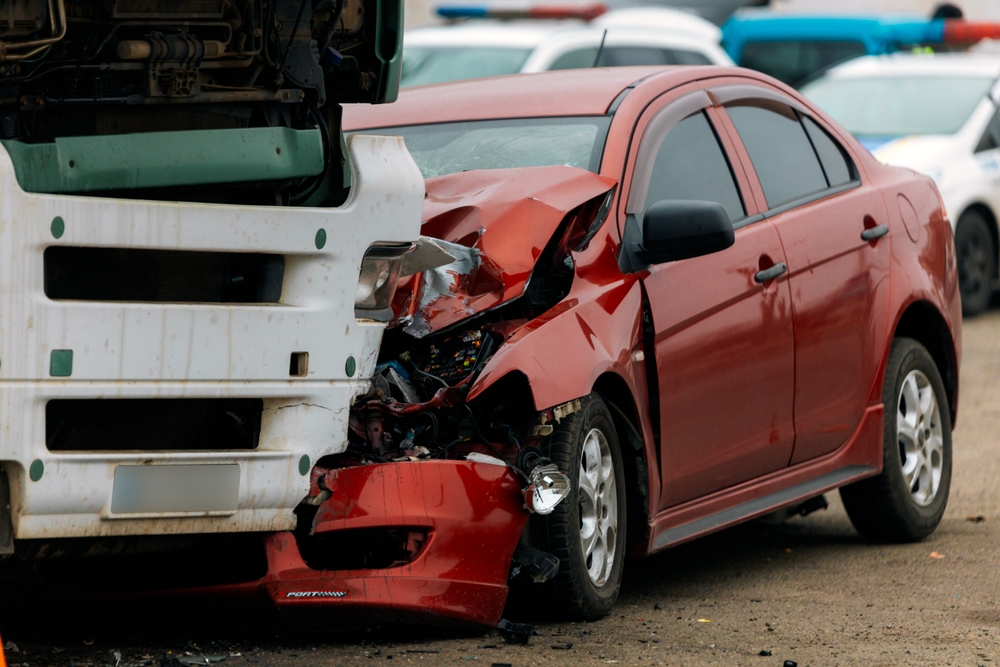
When a crash involves a commercial truck instead of a regular car, the consequences and the legal process can differ significantly. In a city like Las Vegas, where major highways like I-15 and US-95 are constantly packed with freight traffic, these collisions often lead to severe injuries, complex investigations, and bigger insurance battles.
An experienced Las Vegas truck accident lawyer understands that these cases require a comprehensive understanding of federal trucking laws, effective evidence collection, and a thorough knowledge of multi-party liability. This guide explains the significant differences between truck vs car accidents in Las Vegas, helping you understand what to expect if you or a loved one is involved in one.
A fully loaded commercial truck can weigh up to 80,000 pounds, while the average car weighs about 3,000 pounds. This massive difference affects nearly every aspect of a crash, from impact force to recovery time.
Truck collisions often cause catastrophic injuries such as spinal damage, traumatic brain injuries, or multiple fractures. Even low-speed truck crashes can cause significant damage to smaller vehicles or lead to multi-car pileups on busy interstates.
Another factor is stopping distance. A semi-truck traveling at highway speed needs almost twice as much space to stop compared to a car. Add large blind spots and rollover risks, and you have a recipe for serious harm when something goes wrong.
These physical realities make truck accident cases far more complex, often resulting in higher medical bills, more extended recovery periods, and stronger claims for compensation.
Truck accident claims differ from car accident cases primarily due to multi-party liability and federal oversight. A crash might involve not just the driver, but also the trucking company, a maintenance contractor, or even the cargo loader.
Nevada law recognizes that employers can be held liable for their employees’ negligence under the doctrine of respondeat superior. This means that a trucking company may be held responsible for the actions of its drivers while they are on duty.
FMCSA Regulation Reminder: Commercial truck drivers are governed by federal Hours-of-Service rules that restrict driving to a maximum of 11 hours after 10 consecutive hours off duty (49 CFR §395.3).
Truck operators must also comply with Federal Motor Carrier Safety Administration (FMCSA) standards covering maintenance, inspections, and driver logs. Violations—such as skipped rest breaks or faulty brakes — can be critical evidence in proving negligence.
Under Nevada Revised Statutes (NRS 41.130), anyone injured due to another’s negligence has a right to pursue damages. Understanding both federal and state laws is key to handling these claims effectively.

Truck accidents often result in higher settlements, but that doesn’t make them any easier to deal with. Insurance policies for commercial trucks typically have far higher limits, usually starting at $750,000 and extending into millions, compared to the $25,000–$50,000 limits standard for passenger vehicles.
These cases can also involve multiple insurance carriers, each trying to minimize its share of the payout. Negotiations become more complex and time-consuming, especially when serious injuries or fatalities are involved.
|
Factor |
Truck Accident |
Car Accident |
| Average Vehicle Weight | 80,000 lbs | 3,000 lbs |
| Typical Insurance Coverage | $750,000+ (federal minimum) | $25,000–$50,000 |
| Potential Liable Parties | Driver, company, cargo loader | Usually driver only |
| Investigation Complexity | High (FMCSA data, experts) | Moderate |
| Injury Severity | Often catastrophic | Usually moderate |
The numbers show why truck accident claims in Nevada often take longer to resolve—they require deeper investigation and more expert testimony.
Truck accident investigations rely on technical and digital evidence that doesn’t exist in typical car crashes. Lawyers must act quickly to preserve black box data (also called electronic logging device or ELD data), driver logs, and maintenance records.
Trucking companies may face liability not just for a driver’s actions, but also for negligent hiring, poor maintenance, or violation of federal safety standards.
Black box data reveals speed, brake usage, and driver activity leading up to the impact. Maintenance logs and inspection reports can uncover skipped safety checks or mechanical failures. Without early access to this evidence, critical details can be lost or destroyed.
This is why experienced truck accident lawyers often send formal preservation letters to prevent companies from altering or deleting records.
Truck accidents occur for many reasons, but most can be traced back to human or mechanical error.
Common factors include:
According to the Nevada Department of Transportation, large truck crashes account for roughly 10–12% of all fatal traffic collisions statewide each year.
When any of these causes involve a violation of federal or state laws, it strengthens the injured party’s case for compensation under Nevada personal injury law.

Nevada follows a modified comparative negligence rule, outlined in NRS 41.141, which allows victims to recover compensation if they are less than 50% at fault.
Under NRS 41.141, Nevada follows a modified comparative negligence system, allowing recovery if the plaintiff’s fault is less than 50%.
In many truck vs car accident cases, multiple drivers share fault—perhaps a car made a sudden lane change, but the truck driver was speeding or overworked. Each party’s percentage of fault directly affects their compensation.
Insurance companies often use this rule to reduce payouts, making it crucial for victims to understand their rights before negotiating a settlement.
Truck accident cases require more than basic legal knowledge; they demand experience with federal transportation law, technical evidence, and high-stakes negotiations.
At Gina Corena & Associates, our team of Las Vegas personal accident attorneys focuses on evidence-based strategies and fair representation for injured victims. We coordinate with experts, review FMCSA data, and identify all liable parties to ensure every case is handled with precision and care.
Our approach is straightforward: we help clients understand their rights, preserve key evidence early, and pursue rightful compensation in accordance with Nevada law.
They involve multiple liable parties, higher insurance coverage, and federal trucking regulations, making investigation and settlement more complex.
FMCSA regulations govern driver hours, maintenance, and cargo safety. Violations of these federal rules can prove negligence in court.
Black box data, driver logs, maintenance reports, and inspection records are vital to establishing fault and negligence.
Nevada’s comparative negligence law (NRS 41.141) assigns compensation based on each party’s share of fault.
Yes, because of greater damages and higher insurance limits, though cases take longer to resolve.
Seek medical help, document evidence, and contact an attorney before talking to insurance companies.
Truck accidents in Las Vegas are far more complex than regular car crashes. They involve federal regulations, larger insurance policies, multiple parties, and evidence that can disappear fast. Understanding these differences helps victims protect their rights and make informed choices after a severe collision.
If you or someone you care about has been injured in a truck accident, Gina Corena & Associates is here to help you navigate the process with confidence and care. Our experienced legal team understands the unique challenges of truck accident cases and stands ready to fight for your recovery.

As founder of Gina Corena & Associates, she is dedicated to fighting for the rights of the people who suffer life-changing personal injuries in car, truck and motorcycle accidents as well as other types of personal injury. Gina feels fortunate to serve the Nevada community and hold wrongdoers accountable for their harm to her clients.