
GET A FREE CONSULTATION
(702) 680-1111

Founding Member & Managing Partner at Gina Corena & Associates
Practice Areas: Personal Injury
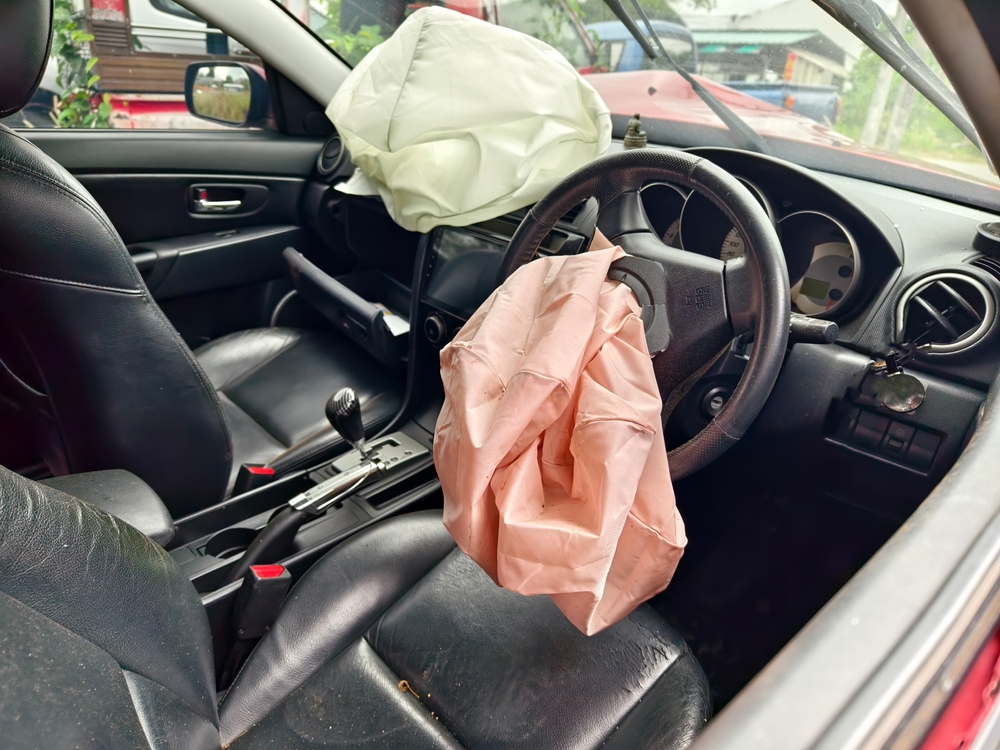
Airbags do not deploy in every collision. However, when they fail during a serious crash, Nevada drivers often question whether a defect or system error is to blame. In a busy city like Las Vegas, understanding why non-deployment happens and what to do next is essential. If you suspect the failure contributed to your injuries, speaking with a Las Vegas personal injury lawyer can help you understand your options.
This guide explains common reasons why airbags fail, what steps to take immediately after a Nevada crash, and how investigations determine whether an airbag malfunction occurred.
Airbags rely on a network of sensors, wiring, and control modules that react to a collision within milliseconds. Understanding how they work helps explain why airbags don’t activate in some crashes.
Airbag deployment depends on factors such as impact angle, crash severity, speed, and whether occupants are wearing seatbelts. Crash sensors measure deceleration and send signals to the airbag module only if specific thresholds are met. These thresholds are set by federal safety standards, not state law.
“According to NHTSA, airbags must deploy within 30 to 50 milliseconds of a severe impact when deployment criteria are met.”
If the sensor detects insufficient force or a non-triggering impact direction, airbags will not deploy. This is often normal, but in some situations, non-deployment may point to a malfunction, wiring issue, or defect.
Federal Motor Vehicle Safety Standard (FMVSS) No. 208 outlines crash protection requirements, including airbag performance. Nevada vehicles follow these federal standards, which establish how and when airbags are designed to deploy.
Not all airbag failures are defects. Several common conditions can prevent deployment, including:
Other causes may include:
“Not every collision meets the deployment threshold; factors such as direction and crash severity determine activation.”
In some cases, a vehicle may have an open airbag recall that the driver is unaware of. Checking recall status through the NHTSA database is an important early step.

When airbags fail to deploy during a serious crash, preserving evidence is essential. These steps help protect your safety and support any later investigation.
A helpful step is to report the issue to the NHTSA Safety Reporting System and check for outstanding recalls. Many airbag defects involve sensors, wiring, or software updates issued after manufacturing.
Airbags reduce the risk of severe head and chest trauma. When they fail, injury risks increase.
Drivers and passengers may suffer:
These injuries occur because airbags and seatbelts are designed to work together. When one system fails, the body absorbs more crash force.
Airbag failure investigations rely heavily on technical analysis. The Event Data Recorder, or EDR, often called the black box, stores crash information such as speed, braking habits, seatbelt use, and whether a deployment command was sent.
Investigators look at:
Manufacturers, mechanics, and engineers may be involved in determining the cause. Preserving the vehicle is crucial because removing parts or repairing them too early can destroy the evidence needed to evaluate a malfunction.
“Failure to preserve the vehicle after a crash may prevent an accurate evaluation of why airbags did not deploy.”

Liability depends on why the airbags failed. Possible responsible parties may include vehicle manufacturers, component suppliers, or repair facilities that serviced the system.
Nevada law does not require airbags to deploy in every crash. That makes identifying the specific cause of non-deployment essential before any legal evaluation.
|
Cause |
How It Is Identified |
| Low impact severity | EDR crash data shows force below threshold |
| Faulty crash sensors | Sensor diagnostics reveal no or incorrect signals |
| Wiring or electrical issues | Inspection finds damaged or loose connections |
| Defective or recalled modules | Recall check or module failure reports |
| Occupant detection errors | System scan shows misread seat occupancy |
| Software or calibration faults | Review of software logs and update history |
No. Airbags deploy only when crash forces meet federal thresholds. Nevada does not mandate activation in all collisions.
Photograph damage, dashboard lights, sensors, and interior impact marks. Preserve the vehicle and obtain a police report for the investigation.
Yes. Faulty modules or sensors under recall may cause non-deployment. Checking the NHTSA database verifies whether a recall applies.
Technicians analyze EDR data, inspect sensors, and test wiring to determine whether a defect, threshold, or system error prevented the airbag activation.
Yes. Airbags cushion crash forces. Without deployment, occupants face higher risks of head, chest, and upper body injuries.
Engineers, mechanics, or investigators analyze the vehicle, EDR data, and diagnostic results to determine the cause of airbag failure.
Airbag non-deployment after a Nevada crash can be alarming. Understanding what happened requires careful documentation and technical review. Preserving the vehicle, reporting the issue, and checking for recalls are vital steps after any serious collision involving a suspected airbag malfunction.
If you need help reviewing evidence or understanding your options, the team at Gina Corena & Associates offers support and guidance, drawing on extensive experience in complex crash investigations. Reach out for a free consultation to discuss your situation and learn how the firm can assist.

As founder of Gina Corena & Associates, she is dedicated to fighting for the rights of the people who suffer life-changing personal injuries in car, truck and motorcycle accidents as well as other types of personal injury. Gina feels fortunate to serve the Nevada community and hold wrongdoers accountable for their harm to her clients.