GET A FREE CONSULTATION
(702) 680-1111

Founding Member & Managing Partner at Gina Corena & Associates
Practice Areas: Personal Injury
A Las Vegas woman was awarded approximately $13 million after a fall at a Lowe’s garden center resulted in a fractured skull and traumatic brain injury. The jury found the store 80% responsible and reduced the award based on the plaintiff’s 20% share of fault. The case illustrates an important principle of Nevada law: an injured person may still recover damages even when they are partially responsible for the accident.
A slip and fall injury does not automatically create liability. To recover compensation, an injured person must prove that the property owner or another responsible party was negligent. In most cases, that requires proof of four legal elements.
To succeed in a Nevada slip-and-fall claim, you must prove four elements:
In many slip-and-fall cases, the primary dispute is whether the property owner knew, or should have known, about the dangerous condition.
To show a breach, you generally have to prove the owner had notice of the hazard. Notice comes in two forms:
Constructive notice is often a key issue in slip-and-fall cases. A puddle left on a grocery store floor for an extended period, or a recurring leak near a freezer, may support an argument that the hazard should have been discovered.
Evidence such as inspection records, cleaning logs, surveillance footage, and prior complaints can help establish the duration of the condition.
The duty a property owner owes depends in part on why the injured person was on the property. Nevada generally recognizes three categories of visitors:
| Invitee | A customer or business guest | Maintain reasonably safe premises and inspect for hazards |
| Licensee | A social guest or other person on the property with permission | Warn of known dangers |
| Trespasser | A person without permission to be on the property | Limited duty, generally to avoid willful harm |
Most slip-and-fall claims involve invitees, including shoppers, hotel guests, and casino patrons. Because businesses invite these individuals onto the property, they owe a higher duty of care than they do to licensees or trespassers.

The word that runs through every slip-and-fall case is “reasonable.” The question is whether the owner acted reasonably to prevent the hazard and whether you acted reasonably as well.
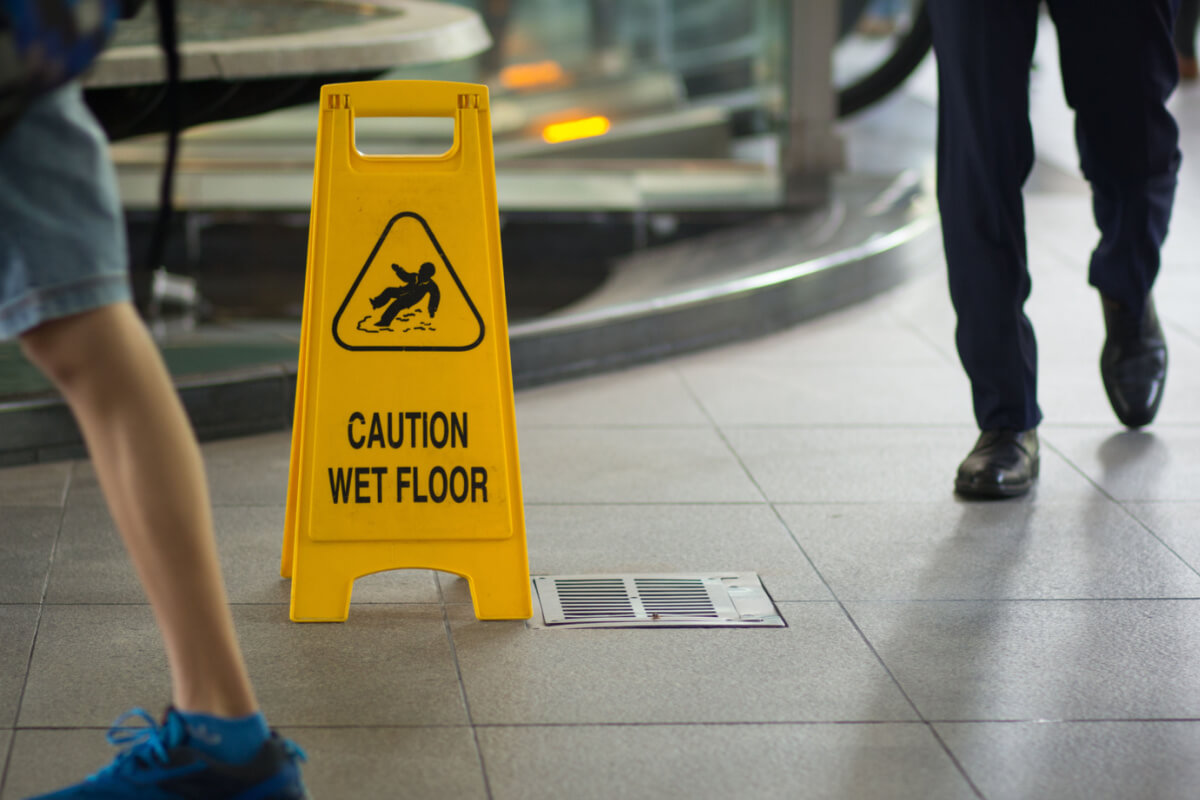
Was there any warning of the danger? If a floor was wet and no clear, visible “wet floor” sign was posted, that absence can be strong evidence of negligence. The law doesn’t assume you’ll spot every hazard on your own.
Many businesses are required to inspect for hazards on a set schedule. Federal OSHA rules require employers to address workplace dangers. If the person responsible for inspecting an area skipped it, or staff ignored a known hazard, that failure supports a negligence claim.
The defense will examine your conduct as well. If you ignored a clearly marked warning or were not paying attention to where you were walking, a jury may assign you a share of the fault. In that situation, Nevada’s comparative negligence rules may affect the amount you can recover.
Evidence is often critical in a slip-and-fall case, particularly when the condition of the property changes shortly after the incident. Important evidence may include:
Because surveillance footage and business records may not be retained indefinitely, it is important to request their preservation as early as possible. An attorney can send a preservation letter requiring the business to retain relevant evidence.

Liability is not always limited to the property owner. Depending on the circumstances, responsibility may also fall on a tenant, a maintenance company, a cleaning contractor, a hotel or casino operator, or a government entity responsible for public property.
Identifying all potentially liable parties is important because multiple insurance policies may be available.
Nevada follows a modified comparative negligence rule under NRS 41.141. An injured person may recover damages as long as they are not more than 50% at fault for the accident. Any recovery is reduced by that person’s percentage of fault.
For example, a person awarded $100,000 in damages who is found 20% at fault would recover $80,000. The Lowe’s case discussed above is one example of how this rule operates in practice.
Property owners often argue that a dangerous condition was open and obvious and should have been avoided. Under Nevada law, however, that argument does not automatically defeat a claim.
Whether a condition was obvious is only one factor in the analysis. A plaintiff may still recover by showing that the circumstances made the hazard difficult to avoid, that reasonable distractions were present, or that adequate warnings were not provided.
A successful slip-and-fall claim may include compensation for medical expenses, future medical care, lost wages, reduced earning capacity, and pain and suffering. The value of a claim depends on the severity of the injuries and their impact on the injured person’s life.
In most cases, Nevada’s statute of limitations gives you two years from the date of the fall to file a premises liability lawsuit under NRS 11.190.
Certain exceptions may apply, including the discovery rule for injuries identified later, special rules for injured minors, and shorter notice requirements for claims involving government property.
A slip-and-fall claim requires proof of four elements: duty, breach, causation, and damages. You must show that the property owner owed a duty of care, failed to meet that duty, caused your injuries, and that you suffered compensable losses.
Actual notice means the property owner knew about the hazardous condition. Constructive notice means the condition existed long enough that a reasonable property owner should have discovered and addressed it. Either may be used to establish negligence.
In most cases, you have two years from the date of the fall to file a premises liability lawsuit under NRS 11.190. Different deadlines and exceptions may apply in cases involving minors, later-discovered injuries, or government entities.
Yes. Under NRS 41.141, you can recover as long as you’re 50% or less at fault; your award is reduced by your share. For example, 20% fault on a $100,000 claim leaves $80,000.
Not automatically. A clear, visible warning helps the business, but it doesn’t excuse a hazard it created or failed to fix, and a missing, hidden, or unclear sign can prove negligence.
Photos and video, witness and employee information, an incident report, preserved surveillance footage, maintenance and inspection logs, and medical records.
The value of a slip-and-fall claim depends on factors such as the severity of the injuries, medical expenses, lost income, and any share of fault assigned to the injured person. Cases involving serious or permanent injuries are generally worth more than claims involving minor injuries.
Report the fall and obtain an incident report; photograph the hazard; gather witness information; seek medical care; and ask that surveillance footage be preserved. Then talk to a lawyer before giving any recorded statement.
Proving negligence requires the right evidence and a clear command of Nevada premises liability law. If you were hurt in a slip-and-fall accident, call 702-680-1111 or contact our team for a free consultation, and we’ll work to get you the compensation you deserve.

As founder of Gina Corena & Associates, she is dedicated to fighting for the rights of the people who suffer life-changing personal injuries in car, truck and motorcycle accidents as well as other types of personal injury. Gina feels fortunate to serve the Nevada community and hold wrongdoers accountable for their harm to her clients.