
GET A FREE CONSULTATION
(702) 680-1111

Founding Member & Managing Partner at Gina Corena & Associates
Practice Areas: Personal Injury
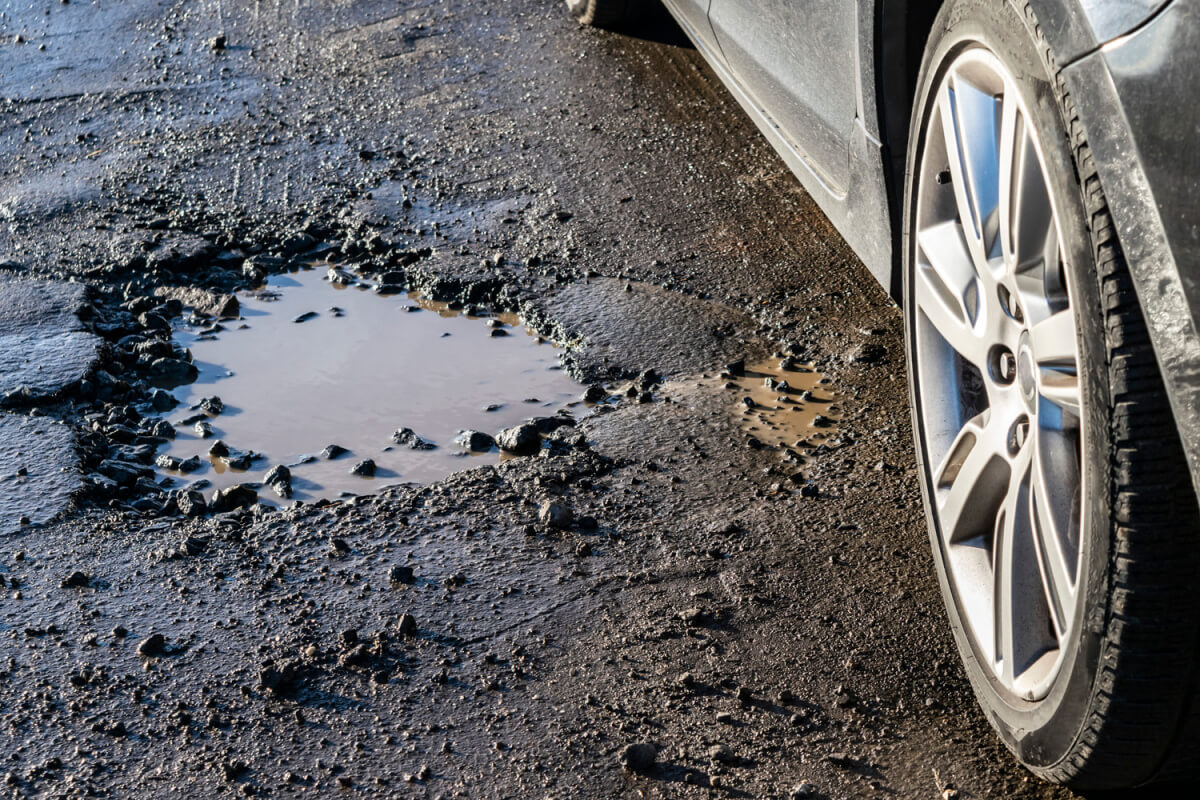
Hitting a pothole can damage a tire, bend a wheel, affect the suspension, or even cause a driver to lose control and crash. When that happens, the repair bill can arrive quickly, but figuring out who should pay is not always simple.
Responsibility may depend on where the pothole was located, who maintained that road, how long the hazard had existed, and whether another factor contributed to the accident.
If you were injured or your vehicle suffered major damage, a Las Vegas car accident lawyer can help identify the agency, property owner, or insurance coverage that may apply.
Potholes form when parts of a road break down. Water, weather, heavy traffic, and poor road conditions can all contribute.
Hitting one can cause:
A driver may also lose control after hitting a large pothole. This can lead to a crash with another vehicle, a wall, or another object.
The first step is finding out who was responsible for maintaining the road.
| Where the Pothole Is Located | Who May Be Responsible |
| Interstate or state highway | Nevada Department of Transportation (NDOT) |
| County road | County or local public works agency |
| City street | City government |
| Private road or parking lot | Property owner or business |
A government agency is not automatically responsible just because a pothole caused damage. You may need to show that the agency knew about the pothole, or should have known about it, and had time to fix it.
Where the pothole is located can help determine who may be responsible for the damage.

Good evidence can help show both the pothole and the damage it caused.
Take photos of:
You should also get a repair estimate and keep records of any reports made to the city, county, or state. Witnesses can also help confirm what happened.
The correct process depends on who maintains the road. For a state-maintained road, a claim against the State of Nevada may require Nevada’s formal tort-claim procedure. The state’s claim form asks for details about how the damage happened and supporting information such as repair estimates.
City and county governments may use their own claim procedures. For private property, a claim may instead involve the property owner, business, or its liability insurer.
That is why you should identify the location and responsible entity before sending a demand or assuming the city is responsible.
Not automatically. If you hit a pothole and damage only your own car, an insurance company may treat the incident differently from a crash involving another negligent driver.
If the pothole causes you to lose control and hit another vehicle, fault may require a closer look. Questions may include whether you were driving at a reasonable speed, whether you could have avoided the pothole, and whether the road itself was dangerously maintained.
Nevada’s comparative negligence rules can also matter when more than one party contributed to an accident.
A driver’s own actions do not automatically remove possible responsibility from a government agency or property owner, but they may affect the amount that can be recovered.

Move somewhere safe and check for injuries or vehicle damage. Then:
Nevada drivers may also have to report certain crashes to the DMV. The reporting requirement can depend on the amount of property damage and whether anyone was injured.
The city may be responsible if it maintained the road, knew about a dangerous pothole, and failed to address it within a reasonable time.
Take clear photos of the pothole and your vehicle, keep repair records, and save any witness information or reports about the road.
Claims against a government agency follow special rules. You may need to show that the agency knew about the dangerous condition and failed to act.
Your policy may cover pothole damage under collision coverage. Check your policy and deductible before filing a claim.
A pothole can leave you with an expensive repair or serious injuries. Who is responsible depends on the road, the pothole’s condition, and what the responsible agency knew about it. Filing a claim can be challenging, and government compensation is not always guaranteed.
A denied pothole claim does not always mean you have no options. An attorney can look at the road conditions, your evidence, and the reason for the denial.
Contact Gina Corena & Associates to discuss your case. Call (702) 359-7155 for a free consultation in English or Spanish.

As founder of Gina Corena & Associates, she is dedicated to fighting for the rights of the people who suffer life-changing personal injuries in car, truck and motorcycle accidents as well as other types of personal injury. Gina feels fortunate to serve the Nevada community and hold wrongdoers accountable for their harm to her clients.