
GET A FREE CONSULTATION
(702) 680-1111
On a motorcycle, there’s no protection between you and the road. When a driver isn’t paying attention, the injuries can be severe and life-changing. Our Summerlin personal injury team stands up to insurance companies and fights for the compensation you deserve.
Free Consultation
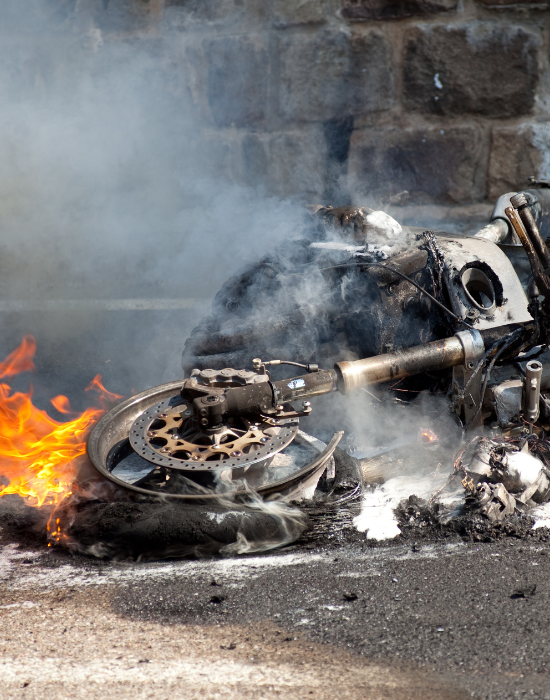
Motorcycle crashes are often severe because riders have almost no protection in a collision. Even a crash at moderate speed can lead to broken bones, road rash, spinal injuries, or traumatic brain injuries. This risk is even higher on busy roads where traffic moves fast, and drivers don’t always notice motorcycles in time.
Recovery after a motorcycle crash is rarely just physical. There are medical bills piling up, time away from work, and the stress of dealing with insurance companies that often try to minimize what really happened.
Gina Corena & Associates handles motorcycle injury claims across the west Las Vegas valley and helps riders pursue compensation from the drivers who hit them.
Your first consultation is free. You owe no fee unless the firm wins. Call (702) 680-1111 when you are ready to talk.
$1,040,000
$1,023,006.92
$1,010,000
$1,010,000
The cases our Summerlin clients bring to us most often include:
Your case may not fit neatly into one category. Hit-and-run crashes, dooring incidents, defective-tire failures, and uninsured-motorist claims: the firm handles the full range of Nevada motorcycle matters.
Tell us what happened, and we will tell you honestly whether you have a case.
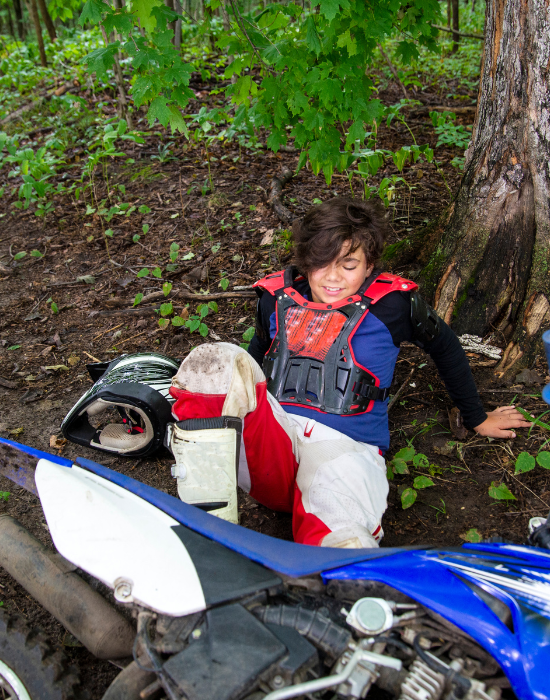
Nevada law requires riders and passengers to wear a DOT-approved helmet (NRS 486.231). Not wearing one doesn’t automatically stop you from bringing a claim, but it can become an issue if the defense argues that a head injury was made worse because a helmet wasn’t used.
A few other traffic rules also matter in motorcycle cases. Lane-splitting is illegal in Nevada, so riding between lanes can quickly become a point of blame in a crash investigation. Even when a driver caused the accident, insurers may still argue for shared fault by pointing to the driver’s lane position.
On the other hand, Nevada’s “Dead Red” rule (NRS 484B.307) recognizes that motorcycles don’t always trigger traffic sensors. It allows a rider to proceed through a light only after coming to a full stop and yielding when it is safe to do so.
Knowing how these laws actually work helps keep the focus where it belongs: on what caused the crash, not just how the rider was positioned in it.
Nevada uses a modified comparative negligence rule (NRS 41.141). That means your compensation is reduced by your share of fault, and if you’re found 51 percent or more responsible, you recover nothing. For example, if a jury values a case at $200,000 and assigns you 20 percent fault, the final recovery would be $160,000.
There’s also a strict deadline to keep in mind. Most personal injury claims in Nevada must be filed within two years of the crash (NRS 11.190). Missing that window usually means losing the right to recover anything, no matter how strong the case is.
In some situations, if the driver is uninsured or underinsured, your own uninsured motorist coverage can sometimes step in to cover losses.

Motorcycle cases often involve serious injuries and insurance companies that try to shift blame onto the rider. We know how these tactics work and focus on building strong, evidence-based claims from the start.
Our firm has handled high-value injury cases across Nevada since 2013, including complex motorcycle accidents involving long-term care and catastrophic injuries. Founder Gina Corena leads the litigation team and has been recognized nationally for her work in personal injury law.
We regularly handle cases filed in the Eighth Judicial District Court in Clark County and know how these claims move through the local system. Clients get direct access to their legal team and clear communication throughout the case.
We work on a contingency fee basis, so you don’t pay unless we recover compensation for you.

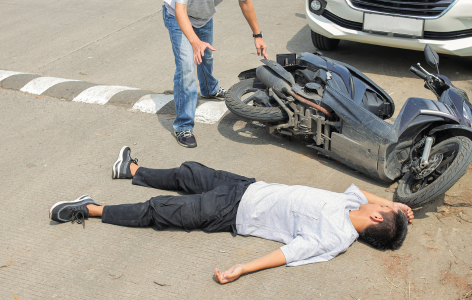
In Clark County, there were 58 motorcyclist deaths in 2025 (preliminary Nevada Office of Traffic Safety figures via LVRJ). Nationally, 6,335 motorcyclists were killed in 2023, which is the highest number since 1975 (NHTSA).
Helmet use also plays a real role in survival. In states with universal helmet laws, only about 10 percent of fatal crashes involve unhelmeted riders. In states without those laws, that number jumps to around 51 percent.
Corridors like Charleston Boulevard and Sahara Avenue fall within the City of Las Vegas High Injury Network, where a small number of streets see a large share of severe crashes.
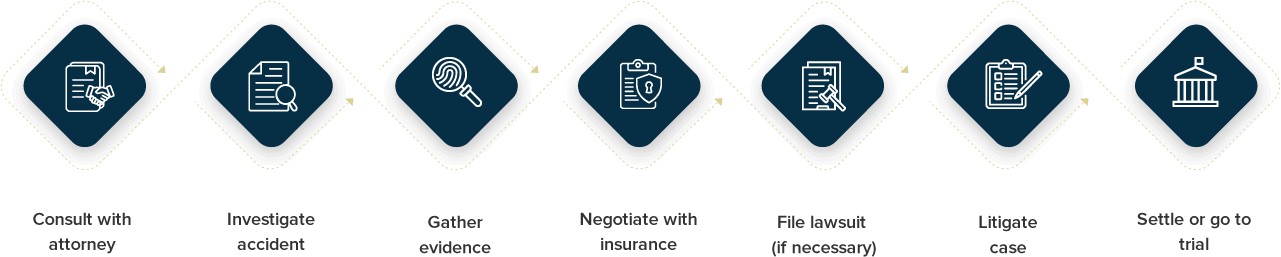
The case usually starts with a close review of the crash, the injuries, and the available evidence. From there, it moves into negotiations with the insurance company. If the insurer doesn’t offer a fair settlement, the next step is filing a lawsuit.
Most riders in Nevada have two years to file a claim under NRS 11.190, though a few situations can change that timeline. There are also protections many riders don’t know about. For example, under Nevada’s “Dead Red” law (NRS 484B.307), a rider can go through a light that doesn’t detect the motorcycle, as long as they’ve stopped and yielded safely.
If a lawsuit is filed, the case typically moves through the Eighth Judicial District Court in Las Vegas, which handles most injury claims in Clark County.

The experience of our attorneys ranges from insurance and commercial law to personal injury and other areas which give our team an unmatched ability to reach a favorable outcome in your case. We handle each matter with accountability and responsiveness, as if we were representing ourselves.
All riders and passengers in Nevada are required to wear a DOT-approved helmet under NRS 486.231. The rule applies to everyone, regardless of age or riding experience.
Often, yes. A missing helmet doesn’t bar your claim, but the defense may argue it worsened a head injury and try to reduce your award under comparative negligence (NRS 41.141).
No. Riding between lanes of traffic is not allowed in Nevada, and doing it at the time of a crash invites a strong fault argument from the other side.
It allows a motorcyclist to go through a red light that doesn’t detect the bike, as long as they’ve come to a full stop and yielded first (NRS 484B.307).
In most cases, it’s the driver making the left turn, since they’re required to yield to oncoming traffic. Fault is usually proven using the police report, crash scene evidence, and witness statements, especially when drivers say they “didn’t see the motorcycle.”
Generally two years from the date of the crash (NRS 11.190). Talk to a lawyer early so a deadline never decides your case.
Nothing up front. We work on a contingency fee, so you pay only if we recover money for you, and the first consultation is free.

Gina Corena founded Gina Corena & Associates to give injured Nevadans a legal team that fights for them, and she leads the firm's attorneys in a practice focused on personal injury law.
“Top 40 Under 40” attorney by the American Society of Legal Advocates
“Ten Best Attorneys” in Nevada