GET A FREE CONSULTATION
(702) 680-1111

Founding Member & Managing Partner at Gina Corena & Associates
Practice Areas: Personal Injury
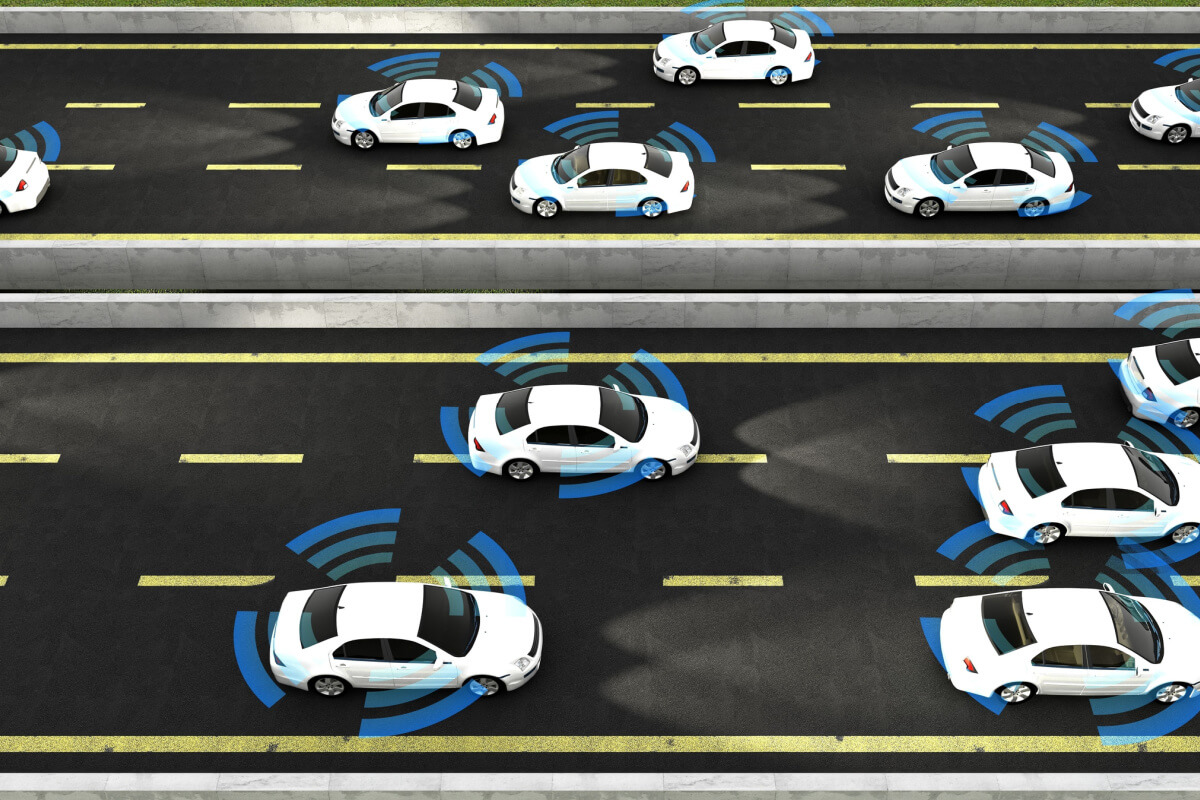
Self-driving and driver-assist cars are becoming more common around Las Vegas, especially in rideshare fleets and newer models with automated features. They are meant to reduce human error, but crashes still happen, and when they do, figuring out who is responsible is not always straightforward.
Unlike a regular accident with one at-fault driver, these cases can involve several parties. That might include the person in the vehicle, the vehicle manufacturer, the software developer, or the company operating the system. Sometimes the blame is shared depending on what actually failed.
If you were hurt in a crash involving a self-driving or driver-assist vehicle, a Las Vegas car accident attorney can help identify who may be responsible and what coverage applies to your case.
Autonomous vehicles still get into collisions, and federal regulators now track them. Since June 2021, the National Highway Traffic Safety Administration (NHTSA) has required manufacturers to report crashes involving automated driving systems and advanced driver-assistance systems. That reporting has confirmed a steady stream of incidents as more of these vehicles hit public roads.
It helps to keep two categories straight:
Crashes happen in both groups. The takeaway is simple: these cars are not crash-proof. Treating them as if they were is one of the most common ways drivers and passengers get hurt.
Autonomous vehicles crash for a mix of technical and human reasons. The cause usually decides who is on the hook for your injuries, so it is worth understanding the main ones.

Liability in a self-driving car crash can fall on a single party or multiple parties, depending on what went wrong. This is the core of any self-driving car accident liability claim, and it usually requires a careful look at the data before anyone can say who is responsible.
Most vehicles on the road today are not fully driverless. They still expect a person to supervise and step in. If a driver ignored warnings, misused an assist feature, or failed to take control during an emergency, their negligence may be the main cause. In that situation, the claim works much like a normal Las Vegas crash, and you can read more about how fault is decided in our overview of autonomous vehicle collisions in Las Vegas.
When a crash traces back to a design or manufacturing defect, the carmaker may be liable under product liability law. This covers things like a braking system that did not respond or a hardware flaw in the automated system.
These claims do not require proving the manufacturer was “careless” in the usual sense. They focus on whether the product was unreasonably dangerous.
The companies that write the driving software, build the AI, or supply the sensors can share responsibility if a coding error or system defect contributed to the crash. As cars become more automated, this group plays a bigger part in liability questions.
If a third party retrofitted a standard car with an automated system and that system failed, that company may bear the blame. Under Nevada law, this distinction matters because the original manufacturer is generally not responsible for a system added by someone else.
In rare cases, a public agency may share fault if poor road design, missing signage, or unsafe conditions contributed to the crash. These claims have strict notice requirements and short deadlines, so they require prompt attention.
Because fault can be split among several parties, Nevada’s comparative negligence rule often comes into play. Under NRS 41.141, you can still recover compensation as long as you are not more than 50% at fault, though your award is reduced by your share of the blame.
Self-driving crash claims often turn into product liability cases, and product cases live or die on data. A modern vehicle records a remarkable amount of information, and getting to it early can make or break your claim.
Key sources of proof include:
This evidence is fragile. It can be overwritten, lost when a vehicle is repaired or scrapped, or held tightly by the manufacturer. That is why dashcam and other footage can be so valuable as a backup, and why our guide to dashcam footage as evidence is worth a look. Acting quickly to preserve it all is one of the most important things you can do.
Nevada was one of the first states to regulate self-driving cars, and those rules affect how accident claims are handled here. The state allows autonomous vehicles under set conditions, including insurance requirements for operators and rules around who is responsible when a system is tested, deployed, or modified. Nevada also follows an at-fault system, so whoever caused the crash, or their insurer, is generally responsible for the damages.
These laws matter because they can change who you pursue for compensation, whether it is an insurer, a fleet operator, or, in some cases, a manufacturer or software company.
For a fuller breakdown, see our explainer on Nevada’s self-driving car laws. And if your crash involved a ride-hailing vehicle, the lines between rideshare and autonomous claims can blur, which we cover in our piece on rideshare versus autonomous vehicle accidents in Las Vegas.

If you are hurt in a crash involving an autonomous or driver-assist vehicle, a few steps can protect both your health and your claim:
It depends on the cause. Fault may rest with the human operator, the vehicle manufacturer, the software developer, a company that converted the car, or a road authority, and it can be shared among them. Pinpointing it usually requires reviewing the vehicle’s data and carefully examining what the automated system did.
Yes. If someone else’s negligence or a defective system caused your injuries, you may file a personal injury claim. Depending on the facts, that claim could target a driver, a manufacturer, a technology provider, or more than one of them.
Often, yes. Most vehicles on the road today still require an alert driver who can take control. If the driver failed to supervise the system or ignored its warnings, their conduct can be a major factor in the fault.
The vehicle’s event data recorder, sensor, and camera logs, and software records are central because they show what the system detected and how it reacted. Dashcam footage, photos, and witness accounts support that data. All of it should be preserved quickly before it is lost.
The goal is to reduce crashes caused by human error, and the technology may help over time. But current vehicles still crash because of software limits, hard-to-read road conditions, and drivers who stop paying attention. They are not accident-proof today.
Self-driving crash claims are some of the most technical cases on the road today, and the parties on the other side have deep pockets and skilled lawyers. You do not have to take them on alone. At Gina Corena & Associates, we investigate these crashes, preserve the data that proves fault, and pursue fair compensation for your injuries.
Call us anytime at (702) 680-1111 for a free consultation, available 24/7 in English and Spanish. There is no fee unless we win. You can also reach out through our contact page.
Reviewed by Gina M. Corena, founding attorney at Gina Corena & Associates.

As founder of Gina Corena & Associates, she is dedicated to fighting for the rights of the people who suffer life-changing personal injuries in car, truck and motorcycle accidents as well as other types of personal injury. Gina feels fortunate to serve the Nevada community and hold wrongdoers accountable for their harm to her clients.