GET A FREE CONSULTATION
(702) 680-1111

Founding Member & Managing Partner at Gina Corena & Associates
Practice Areas: Personal Injury
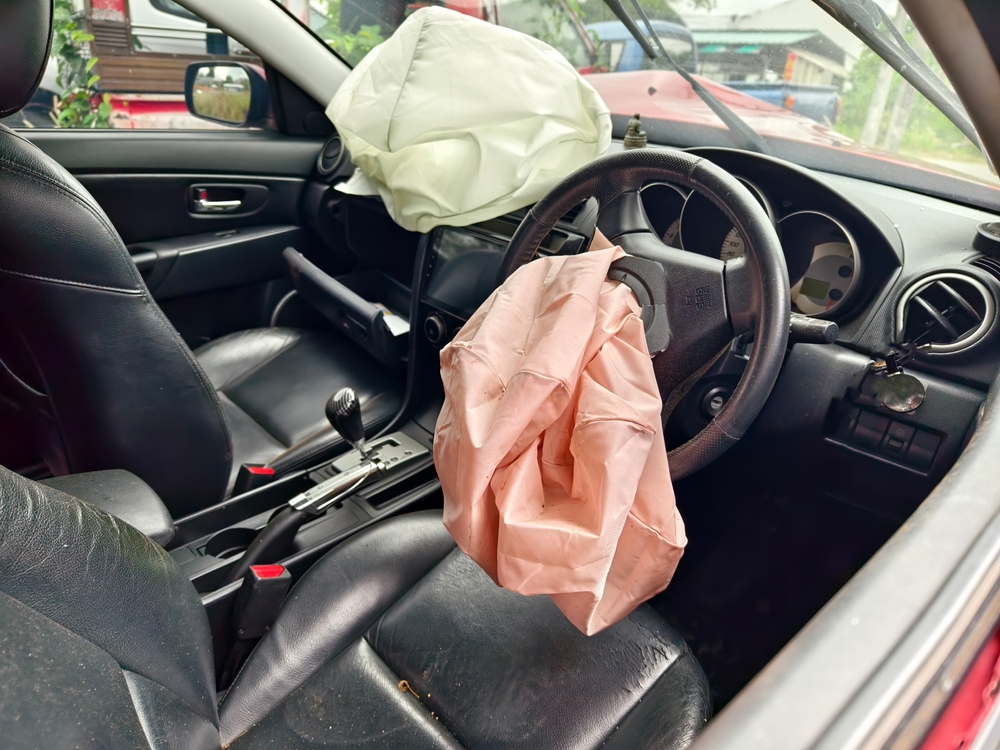
When airbags fail to deploy in a crash, injuries can be much more serious than they need to be. A safety feature meant to reduce harm may leave drivers and passengers facing head injuries, broken bones, facial injuries, or other trauma.
In Nevada, a failed airbag claim may involve more than the driver who caused the accident. Depending on the circumstances, the vehicle manufacturer, parts supplier, or another party may share responsibility.
If this happens to you, you may have more than one path to compensation, and you do not have to sort it out alone. A skilled car accident lawyer in Las Vegas can review what went wrong and tell you whether the driver who hit you, a parts manufacturer, or both may be on the hook.
Below, we explain how airbags are supposed to work, why they sometimes fail, who can be held responsible under Nevada law, and the steps that protect your health and your case after a crash.
No. Airbags are designed to deploy only in moderate-to-severe frontal or near-frontal crashes, usually above a certain speed and crash-force threshold. If your airbag stayed in during a low-speed fender-bender or a side impact, your car wasn’t built to sense that, and that may be normal, not a defect.
The problem is the opposite: a hard, head-on, or angled collision that clearly should have triggered the airbag, yet it never fired. That is when a product defect or a faulty sensor becomes a real possibility worth investigating.
Airbags work through a system of crash sensors, a control unit, an inflator, and the airbag itself. During a serious collision, sensors detect sudden changes in speed and send a signal to the control module. The inflator then fills the airbag within milliseconds to help protect occupants from impact injuries.
For an airbag system to work properly, every part has to do its job. A faulty sensor, damaged wiring, a bad connector, a software issue, or a defective inflator can prevent the system from working as intended. The airbag may deploy too late, with the wrong force, or not deploy at all.
Airbags are designed to work with seat belts, not replace them. Seat-belt use can also affect how an injury claim is evaluated in Nevada. If you want to understand how seat-belt use can affect a Nevada case, our overview of seat belts and accident compensation breaks it down in plain language.

When an airbag should have fired and did not, the cause usually traces back to one of a few problems:
Recalls are a reality of this industry. Defective inflators and faulty airbag control units have led to some of the largest auto recalls in history. If your vehicle was under an open recall for an airbag component, that history can become important evidence in your case.
It depends on what caused the failure, and more than one party can share responsibility. Nevada is an at-fault (tort) state, which means the person or company whose negligence caused your harm can be held financially responsible.
In an airbag case, liability often falls into one of these buckets:
Sorting out who is responsible takes investigation. The data stored in your car’s airbag control module and event data recorder can show whether the system registered the crash and why it did or did not fire. Preserving that evidence early can make or break a defect claim.
A few Nevada rules shape what you can recover and how long you have to act.
In most Nevada car accident injury cases, the statute of limitations is two years from the date of the crash under NRS 11.190(4)(e). Product liability claims involving defective airbags may have different timing considerations, so reviewing the details of your case is important before the deadline passes.
Nevada follows a modified comparative negligence rule under NRS 41.141. You may still recover compensation if you are found 50% or less at fault, but your compensation can be reduced based on your percentage of fault. If you are found more than 50% responsible, you cannot recover damages.
Insurers and manufacturers may try to pin part of the blame on you, which is one reason careful documentation matters.
Depending on your case, damages can include economic losses, such as medical bills, future care, and lost wages, as well as non-economic losses, such as pain and suffering. If your injuries kept you off the job, our guide on recovering lost wages after an injury explains how that part of a claim works.
Every case is different, and the value of a claim turns on the facts. Treat any figure you read online as general information, not a promise.

The steps you take in the first days can protect both your recovery and your claim:
Adjusters may move fast to settle. For a sense of the tactics to watch for, see our overview of insurance company settlement tactics.
These claims often combine two distinct types: a standard crash claim against the at-fault driver and a product liability claim against the manufacturer. Each has its own rules, its own evidence, and its own opponents with deep pockets and experienced lawyers.
Automakers rarely admit a defect. Proving one’s case usually requires engineering analysis, the vehicle’s stored data, and sometimes expert testimony about how the airbag system should have performed. That is a heavy lift to carry on your own while you are also trying to heal.
Having someone build the case for you, preserve the evidence, and deal with the insurers can take that weight off your shoulders.
Possibly, yes. If a crash was severe enough that the airbag should have deployed and a defect kept it from firing, you may have a product liability claim against the manufacturer in addition to a claim against the at-fault driver. A lawyer can review the crash data and the facts to tell you whether a defect claim is realistic.
An open recall on an airbag component can be strong evidence that a known defect contributed to the failure. Hold onto any recall notices and avoid repairing the airbag system until it has been examined. The recall history may support both your claim and the broader picture of what went wrong.
Yes, and it does not cancel out a defect claim. The other driver can be held responsible for causing the collision, while a manufacturer can be separately responsible for injuries made worse by a defective airbag. More than one party can owe you compensation in the same case.
Most Nevada car-accident injury claims must be filed within two years of the crash under NRS 11.190(4)(e). Product liability claims can involve different timing considerations, so confirm your specific deadline with an attorney as soon as possible to avoid losing your right to recover.
Not before your own expert has had a chance to examine the airbag system and the vehicle’s data. Your car is key evidence in a non-deployment case. Talk to a lawyer before agreeing to repairs, a total-loss payout, or letting the insurer take possession of the vehicle.
If your airbags failed to deploy in a crash, understanding what caused the failure and who may be responsible can be an important step. Gina Corena & Associates offers a free consultation to discuss your situation, with no fee unless we win your case.
Call (702) 680-1111 to speak with the team in English or Spanish, or contact us online to learn more about your legal options after an airbag-related injury.
Reviewed by Gina M. Corena, founding attorney at Gina Corena & Associates.

As founder of Gina Corena & Associates, she is dedicated to fighting for the rights of the people who suffer life-changing personal injuries in car, truck and motorcycle accidents as well as other types of personal injury. Gina feels fortunate to serve the Nevada community and hold wrongdoers accountable for their harm to her clients.