GET A FREE CONSULTATION
(702) 680-1111

Attorney at Gina Corena & Associates
Practice Areas: Personal Injury
Nevada’s car seat rules depend on a child’s age, height, and the type of restraint being used. For parents, the harder question is often knowing when a child can safely move from one stage to the next.
If your child is injured in a crash caused by another driver, a dedicated Las Vegas car accident attorney can explain your legal options and help you pursue compensation.
This guide explains Nevada’s child restraint laws, when children should move from a rear-facing seat to a booster, and what to do if your child is hurt in a car accident.
Under NRS 484B.157, a child who is under 6 years old and under 57 inches tall must be secured in an approved child restraint system.
The restraint must:
Children under 2 years old generally must ride in a rear-facing child restraint in the back seat. Nevada provides limited exceptions, including certain medical needs, vehicles without a back seat, or situations where all back seats are occupied by other children under 2. Read NRS 484B.157 on the Nevada Legislature website.
|
Child |
Nevada Requirement |
| Under age 2 | Generally must ride rear-facing in the back seat, subject to limited exceptions |
| Under age 6 and under 57 inches | Must use an approved child restraint appropriate for the child’s size and weight |
| Age 6 or older | The general under-6 child restraint requirement no longer applies |
| Under age 13 | NHTSA recommends riding properly restrained in the back seat |
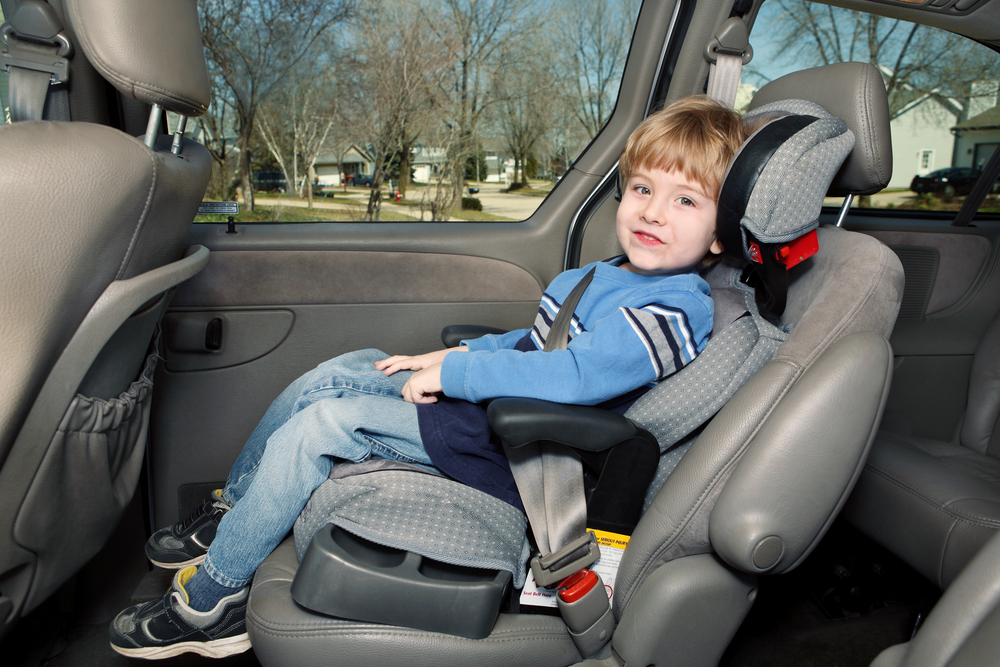
Nevada law provides the legal minimum. A child may still need a booster after turning 6 if the vehicle’s seat belt does not fit properly.

Children should move to the next type of restraint based on their size and the limits of their current seat, not simply because they reached a certain birthday.
A common rule of thumb for moving out of a booster is whether the child can sit all the way back with knees bent at the edge of the seat and stay that way for the whole ride. If they slouch to get comfortable, the belt won’t protect them the way it should.
Nevada does not set a general minimum age for a child to sit in the front passenger seat. There is an important exception for very young children. Children under 2 generally must ride rear-facing in the back seat unless one of the exceptions in NRS 484B.157 applies. If an exception allows a rear-facing child to ride in front, the passenger-side airbag must be deactivated.
For older children, NHTSA recommends keeping children in the back seat through age 12. The back seat reduces their exposure to front airbags and provides better protection in many crashes.
If a child must sit in front, make sure the restraint or seat belt fits correctly and follow both the vehicle and car-seat manufacturer’s instructions.
A first violation of NRS 484B.157 can result in a $100 to $500 fine or 10 to 50 hours of community service. For a second offense, the penalty increases to a $500 to $1,000 fine or 50 to 100 hours of community service. A third or later offense can result in a driver’s license suspension of 30 to 180 days.
Nevada also gives some drivers an opportunity to complete an approved child-restraint training program. Completing the program within 60 days after sentencing can result in the first-offense penalty being waived or a qualifying second-offense penalty being reduced by half.
Nevada law contains an important protection that parents should know about. Under NRS 484B.157(6), a violation of Nevada’s child-restraint law may not be considered negligence in a civil action.
That means simply violating this particular car seat statute cannot, by itself, be used to establish negligence in a personal injury case.
If another driver causes a crash that injures a child, responsibility for the collision is determined separately based on the facts of the accident.
Other issues involving the child’s injuries, medical treatment, available insurance coverage, and damages may still need to be reviewed based on the circumstances.

Meeting Nevada’s legal requirements is only one part of keeping a child properly restrained. A few regular checks can help as children grow and car seats change.
NHTSA provides car-seat recommendations, recall information, and resources for finding child passenger safety inspection locations.
Nevada’s child-restraint requirement applies to children who are both under 6 and under 57 inches tall. Older children may still need boosters for proper seat-belt fit.
Yes. Children under 2 generally must ride in a rear-facing restraint in the back seat. Nevada allows limited exceptions for certain medical needs and vehicle configurations.
A first offense can result in a $100 to $500 fine or 10 to 50 hours of community service. An approved training program may allow a waiver.
Nevada has no general minimum front-seat age, but special rules apply to children under 2. NHTSA recommends that children remain in the back through age 12.
Nevada’s car seat law sets clear minimum requirements, but the safest restraint still depends on a child’s age, size, and the limits of the seat being used.
If your child was injured because another driver caused a crash, the legal issues are separate from simply whether a car seat law was followed.
Gina Corena & Associates offers free consultations for families with questions after a child is injured in a Las Vegas car accident. The firm’s attorneys can review the crash, available insurance coverage, and the circumstances surrounding the child’s injuries.

As founder of Gina Corena & Associates, she is dedicated to fighting for the rights of the people who suffer life-changing personal injuries in car, truck and motorcycle accidents as well as other types of personal injury. Gina feels fortunate to serve the Nevada community and hold wrongdoers accountable for their harm to her clients.