GET A FREE CONSULTATION
(702) 680-1111

Founding Member & Managing Partner at Gina Corena & Associates
Practice Areas: Personal Injury
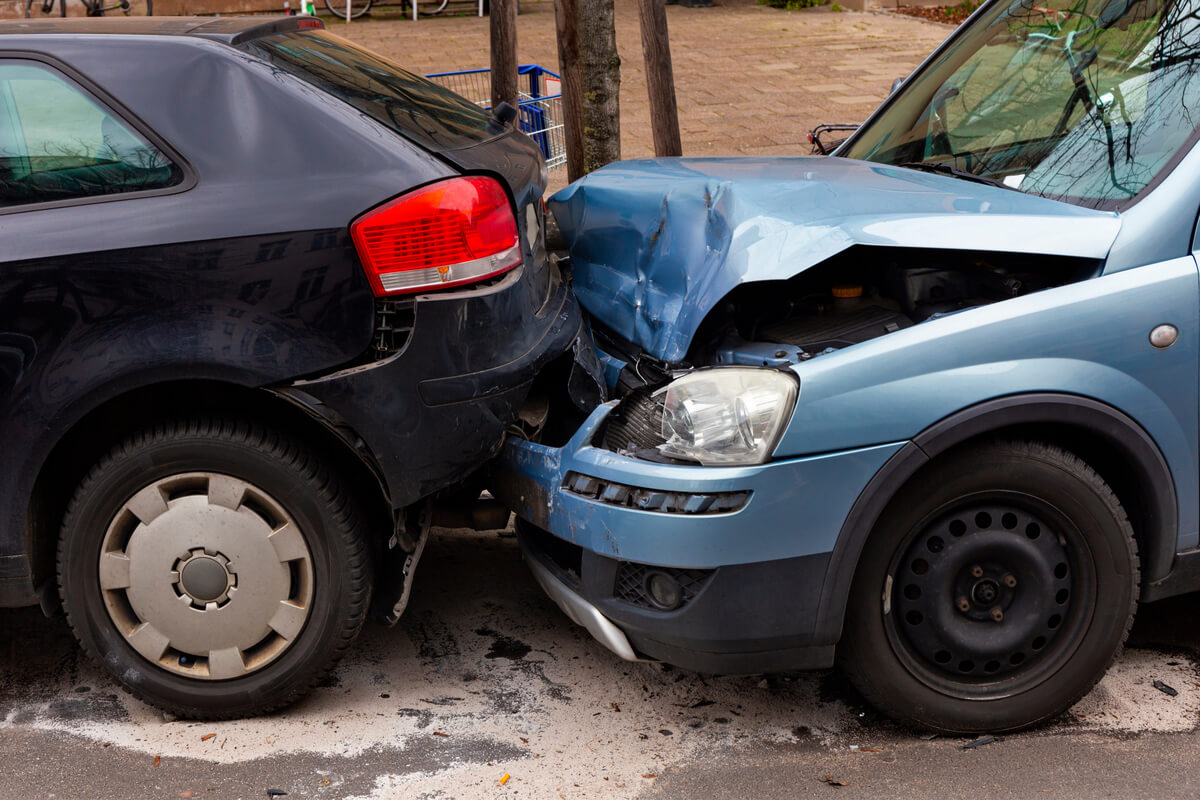
Being hit from behind does not always mean the other driver is automatically at fault. In Nevada, responsibility depends on what happened before the crash and what the evidence shows.
Following distance, speed, lane changes, sudden stops, witness statements, and video footage can all affect the fault decision. A Las Vegas rear-end collision attorney can help gather that evidence and build a strong claim.
This guide explains how rear-end crashes are reviewed in Las Vegas, when the driver behind may not be fully responsible, and what evidence can help prove what happened.
Not always. Nevada law requires drivers to keep a reasonable following distance based on speed, traffic, and road conditions.
“The driver of a vehicle shall not follow another vehicle more closely than is reasonable and prudent.”
This often puts fault on the rear driver when they follow too closely, speed, or fail to react in time. But the front driver may also contribute to the crash by reversing, cutting into a lane, or stopping unsafely.
In Nehls v. Leonard, the Nevada Supreme Court made clear that fault depends on the circumstances and evidence, not simply on which vehicle struck the other from behind.
A rear driver may have less responsibility, or possibly no responsibility, when another driver’s actions caused the collision.
Examples may include:
Under NRS 484B.413, drivers must give an appropriate signal before suddenly slowing when another vehicle is close behind.
Fault still depends on the full circumstances, including following distance, traffic, visibility, and each driver’s actions.
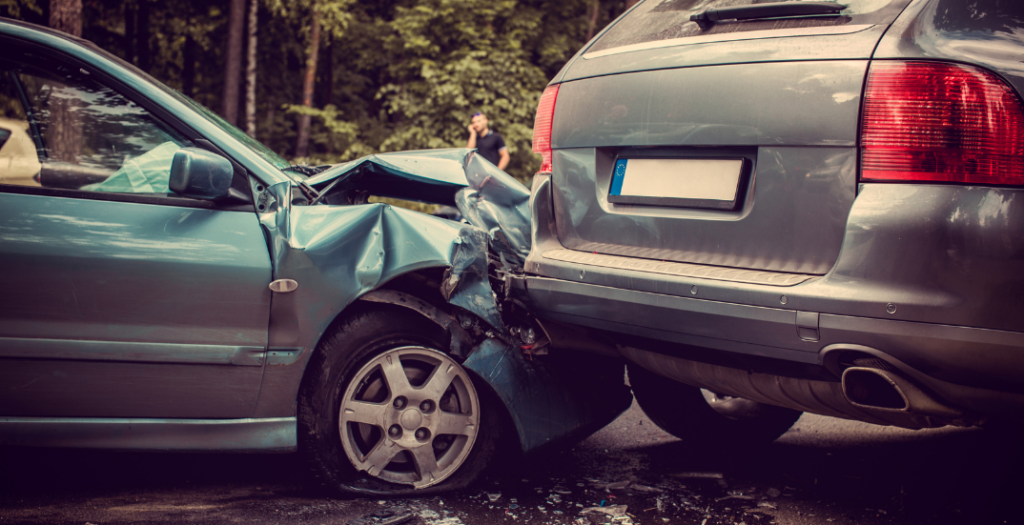
Knowing who is at fault in a rear-end collision often depends on evidence showing what happened just before impact.
|
Evidence |
What It May Help Show |
| Scene photos | Vehicle positions, damage, road conditions, lane markings |
| Dashcam footage | Braking, following distance, lane changes, reversing |
| Witness statements | What happened immediately before impact |
| Police investigation | Parties, witnesses, observations, crash circumstances |
| Vehicle damage | Impact location and possible collision sequence |
| Surveillance footage | Vehicle movement before and during the crash |
| Repair or vehicle records | Damage or potentially relevant mechanical issues |
The more clearly the evidence shows the sequence of events, the easier it is to assess how the crash happened and whether more than one driver may share fault.
In a crash involving several vehicles, fault depends on how the chain reaction started and what caused each impact.
For example, if one driver hits the car ahead and pushes that car into another vehicle, the middle driver may not be responsible for the second collision. In other cases, more than one driver may have contributed.
Photos, dashcam footage, witness statements, police observations, and vehicle damage can help show the order of impact and each driver’s role in the crash.
More than one driver can be responsible for a rear-end crash. Under NRS 41.141, Nevada follows a modified comparative negligence rule. This means compensation can be reduced based on a person’s share of fault.
For example, if a driver has $100,000 in damages but is found 20% at fault, the amount may be reduced to $80,000. A driver who is 50% at fault may still recover damages. However, recovery is generally barred if that driver’s share of fault is greater than the other party’s.
What you do after a rear-end crash can affect how clearly the accident can be understood later. Once the scene changes, some evidence may be difficult to recover.
If it is safe to do so:
Nevada generally requires an SR-1 report within 10 days when a crash involves injury, death, or more than $750 in damage and was not investigated at the scene by law enforcement.
Preserving evidence early can make it easier to show how the rear-end crash happened and what role each driver played.
No. Rear drivers are often responsible, but Nevada law considers following distance, driver actions, traffic conditions, and other evidence before fault is determined.
A rear driver may have reduced or no fault if another driver reverses, makes an unsafe lane change, stops improperly, or otherwise causes the collision.
The following driver may be responsible when hitting a lawfully stopped vehicle, but fault still depends on the circumstances and available evidence from the crash.
Photos, dashcam video, independent witnesses, surveillance footage, police documentation, vehicle damage, and physical evidence can help establish how a rear-end collision occurred.
Start by moving to a safe place if possible and checking for injuries. Then exchange information, photograph the scene, speak with witnesses, and report the crash if required.
Rear-end collision fault is not decided simply by looking at which vehicle has front-end damage. Nevada law considers how each driver acted and what the evidence shows about the moments before impact.
Photos, video, witnesses, vehicle damage, and the collision sequence can all help establish who was responsible. Shared fault can also affect how a claim is handled under Nevada law.
If you were injured in a rear-end crash and have questions about how fault may apply to your situation, Gina Corena & Associates offers free consultations. Our Las Vegas car accident attorneys can review the available evidence and explain how Nevada law may apply to the circumstances of the crash.

As founder of Gina Corena & Associates, she is dedicated to fighting for the rights of the people who suffer life-changing personal injuries in car, truck and motorcycle accidents as well as other types of personal injury. Gina feels fortunate to serve the Nevada community and hold wrongdoers accountable for their harm to her clients.