GET A FREE CONSULTATION
(702) 680-1111
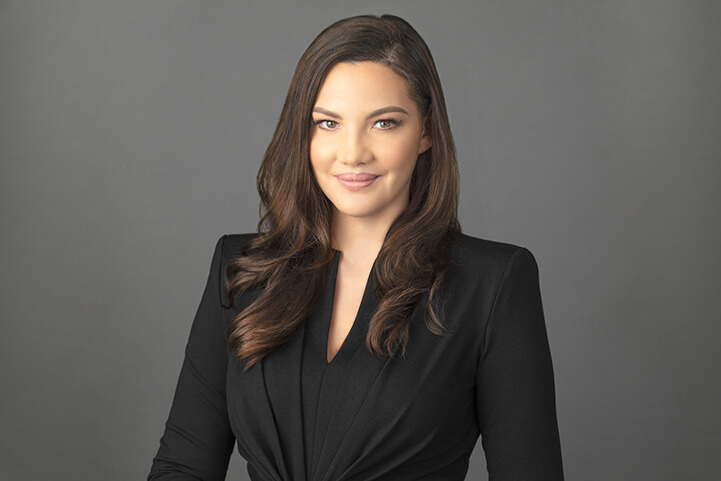
Founding Member & Managing Partner at Gina Corena & Associates
Practice Areas: Personal Injury

Failure-to-yield accidents often happen at intersections, turns, and merge points. They can lead to serious injuries because drivers usually have little time to react before impact.
In many cases, the driver who failed to yield is responsible for the crash. However, fault is not always automatic. An auto collision lawyer in Las Vegas can review the evidence, determine who was at fault, and explain your options for recovering compensation.
This guide explains Nevada’s right-of-way rules, how fault is determined, and what you should know after a failure-to-yield accident.
A failure-to-yield accident occurs when a driver fails to yield the right-of-way to another vehicle or pedestrian who legally has it. Nevada’s traffic laws require drivers to yield in specific situations, and violating those rules can be evidence of negligence.
For example, NRS 484B.253 requires drivers turning left to yield to oncoming traffic that is close enough to create a hazard. Other laws cover situations such as entering a roadway from a driveway, merging into traffic, and yielding to pedestrians in crosswalks.
Even when a driver has a green light or another right to proceed, they are still expected to use reasonable care and watch for other vehicles and pedestrians before moving forward.
These crashes tend to follow a handful of patterns. Knowing which one fits your case helps explain why the law usually points to the other driver.
In each of these, the question is simple to state and harder to prove: who had the right of way, and who failed to give it?

To recover compensation in Nevada, you generally have to show that the other driver owed you a duty of care, breached it by failing to yield, and caused your injuries as a result. A traffic citation for the violation helps, but it is rarely the whole case on its own. The insurance company can still argue that you contributed to the crash.
Objective evidence is what settles a disputed right-of-way case, and the most useful proof often disappears within days.
Sources that tend to carry weight include:
Many drivers assume traffic cameras automatically record every crash, but that is generally not the case in Las Vegas. Most cameras at major intersections are live traffic monitoring feeds and are not recorded for later review.
That makes other evidence, such as dashcam footage or video from nearby businesses, much more valuable. Because video can be overwritten quickly, it is important to preserve it as soon as possible after a crash.
Failure to yield does not automatically place all the blame on one driver. The driver with the right of way still has a duty to drive safely, and their own conduct can shift the fault percentages.
Common ways fault gets split include:
Because fault can be divided, every detail in the evidence matters. A clear record of the other driver’s speed or signal violation can move the percentages and change what you recover.
Nevada follows modified comparative negligence under NRS 41.141. You can still recover compensation as long as you are not more than 50 percent at fault, and your recovery is reduced by your share of the blame. If you are found 51 percent or more at fault, you recover nothing.
Here is how that works in a failure-to-yield case. Suppose your damages total $100,000, and the insurer argues you pulled out too soon at a stop sign. If the evidence shows the other driver was speeding well over the limit, a jury might assign them 70 percent of the fault and you 30 percent. You would still recover, but your award would be reduced by 30 percent, leaving $70,000.
This is exactly why insurance companies fight so hard over fault percentages. Every point of blame they push onto you lowers what they pay. An adjuster who insists you were “automatically” responsible because you were the one turning or merging is often skipping the part where the other driver’s conduct shifts the numbers.

If another driver’s failure to yield is established, the compensation available may include:
In Nevada, you generally have two years from the date of the crash to file a personal injury lawsuit, under NRS 11.190(4)(e). Insurance claims should begin much sooner, and they are often disputed when fault is unclear. Every case is different, so confirm your specific deadline with a lawyer rather than assuming.
The driver who failed to give the right of way is usually at fault, because Nevada law spells out who must yield in each situation. That presumption can shift, though, if the other driver was speeding, ran a red light, or was otherwise breaking the rules.
A citation is strong evidence, but it does not automatically settle a civil claim. You still have to show the violation caused your injuries, and the insurance company can argue you shared some of the fault.
Yes, as long as you were not more than 50 percent at fault. Under Nevada’s modified comparative negligence rule, your compensation is reduced by your percentage of fault, and at 51 percent or more, you recover nothing.
You may be able to use your own uninsured or underinsured motorist coverage. Our page on Nevada uninsured motorist coverage explains how that protection works.
You generally have two years from the date of the crash to file a personal injury lawsuit in Nevada. Insurance claims should start much sooner, and deadlines can vary, so confirm yours with an attorney early.
If a driver who should have yielded hurt you, do not let their insurer decide your case for you. The team at Gina Corena & Associates handles disputed right-of-way crashes across Nevada and can help you gather the evidence that shows who really had the right-of-way.
Call (702) 680-1111 any time, day or night, for a free consultation in English or Spanish. You pay no fee unless we win. You can also reach out through our contact page to get started.
Reviewed by Gina M. Corena, founding attorney at Gina Corena & Associates.

As founder of Gina Corena & Associates, she is dedicated to fighting for the rights of the people who suffer life-changing personal injuries in car, truck and motorcycle accidents as well as other types of personal injury. Gina feels fortunate to serve the Nevada community and hold wrongdoers accountable for their harm to her clients.