GET A FREE CONSULTATION
(702) 680-1111

Founding Member & Managing Partner at Gina Corena & Associates
Practice Areas: Personal Injury

You’re stopped at a red light on Las Vegas Boulevard, and the next thing you feel is a hard jolt from behind. Now your neck hurts, your bumper is crushed, and the other driver is already insisting it wasn’t their fault. So who actually pays?
Most people assume the rear driver is automatically to blame in a rear-end crash. That’s usually true, but it isn’t a hard rule. Nevada looks at what each driver did, and the answer can shift depending on the facts. If your injuries are serious or the insurance company is fighting you, it helps to talk with a Las Vegas car accident lawyer before you accept any blame or sign anything.
This guide explains how fault works in a rear-end collision, when the front driver may be responsible, and what you can do to protect your right to compensation.
No. The rear driver is usually presumed at fault, but that presumption can be challenged. Nevada drivers are expected to keep a safe following distance and stay alert, so when someone hits the car in front of them, the law often starts by pointing at the rear driver.
That starting point can change when the front driver does something unsafe, like reversing suddenly or driving with broken brake lights.
In short, the rear driver carries the burden most of the time, but fault depends on the evidence in your specific crash.
The presumption comes from a simple safety duty. Every driver has to leave enough room to stop if traffic ahead slows or stops. When a driver tailgates, speeds, or looks down at a phone, they give themselves no time to react, and the car in front pays the price.
A few common reasons rear-end crashes happen in and around Las Vegas:
The National Highway Traffic Safety Administration reports that rear-end collisions account for roughly 29% of all traffic accidents, which is part of why insurers see them so often and lean on the rear-driver presumption.
The front driver isn’t always innocent. In real crashes, the lead driver sometimes creates the danger, and Nevada law lets you show that.
Common situations where the front driver shares or carries the blame include:
Because both drivers’ actions count, no one should assume the case is closed just because they were the one in back or the one in front.
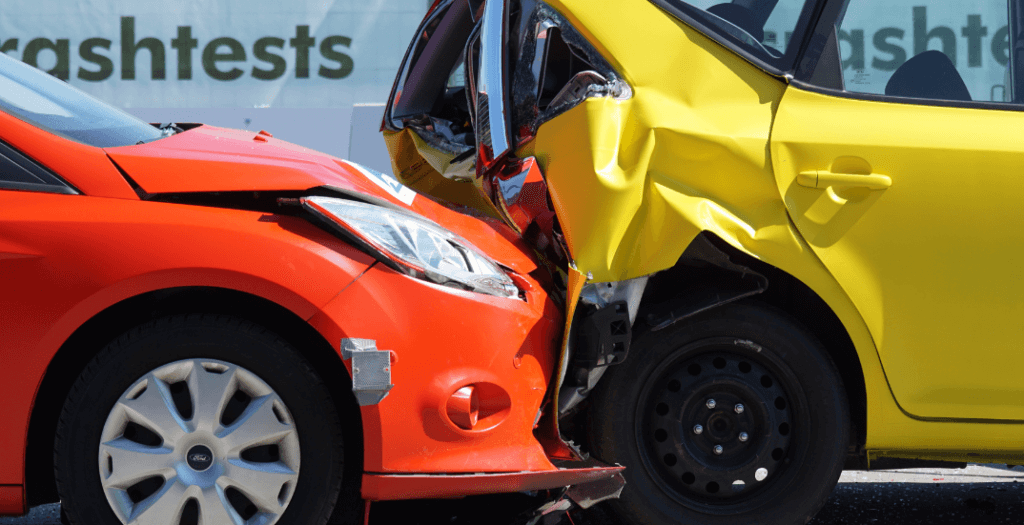
Fault is decided by evidence, not by who apologizes at the scene. Insurance adjusters and, if needed, a court will look at the facts to build a picture of what happened.
The most useful evidence usually includes:
Video gets deleted, memories fade, and skid marks disappear. The sooner the evidence is preserved, the stronger your position.
Nevada uses modified comparative negligence, so you can still recover money even if you were partly at fault, as long as you were not more than 50% to blame. Your compensation is then reduced by your share of fault. If you’re found 51% or more at fault, you recover nothing.
Here’s a simple example. Say your damages are $20,000, and the insurer argues you were 20% at fault because your brake light was out. Under Nevada’s rule (NRS 41.141), you could still recover, but your award would be reduced by 20% to $16,000.
This is exactly why insurance companies try to pin part of the blame on you, and why pushing back on an unfair fault percentage can be worth real money.

What you do in the first days can shape your claim. If you’ve been rear-ended, these steps help protect both your health and your case:
Keep in mind that Nevada generally gives you two years from the date of the crash to file a personal-injury lawsuit (NRS 11.190). Waiting too long can cost you the right to recover at all, so it’s smart to confirm your deadline early.
No. The rear driver is usually presumed at fault because drivers must keep a safe following distance, but that presumption can be overcome. If the front driver reversed, stopped suddenly for no reason, or had broken brake lights, they may share or carry the blame.
Yes, as long as you were not more than 50% at fault. Nevada’s modified comparative negligence rule lets you recover, but your compensation is reduced by your percentage of fault. At 51% or more, you cannot recover.
Generally, two years from the date of the accident for personal injury claims under NRS 11.190. Property-damage claims have a longer window. Because exceptions exist, it’s best to confirm your exact deadline with a lawyer.
You may be able to recover economic damages, such as medical bills, lost wages, and vehicle repairs, as well as non-economic damages, such as pain and suffering. In rare cases involving egregious conduct, like a drunk driver, punitive damages may apply.
Not every minor fender-bender needs one, but if you were injured, missed work, or the insurer is disputing fault, a lawyer can often increase what you recover. Most personal-injury firms, including ours, offer a free consultation, so there’s no cost to find out.
If you were hurt in a rear-end crash, you don’t have to argue with the insurance company alone. At Gina Corena & Associates, we investigate what really happened, push back on unfair fault claims, and fight for the full compensation you’re owed. Every case is different, and we’ll give you an honest read on yours.
Call us anytime at (702) 680-1111 for a free consultation, answered 24/7 in English and Spanish. There’s no fee unless we win your case. You can also reach out through our contact page to get started.
Reviewed by Gina M. Corena, founding attorney at Gina Corena & Associates.

As founder of Gina Corena & Associates, she is dedicated to fighting for the rights of the people who suffer life-changing personal injuries in car, truck and motorcycle accidents as well as other types of personal injury. Gina feels fortunate to serve the Nevada community and hold wrongdoers accountable for their harm to her clients.