Gina M Corena at GIna Corena & Associates

Founding Member & Managing Partner at Gina Corena & Associates

Practice Areas: Personal Injury

Failure-to-yield accidents often happen at intersections, turns, and merge points. They can lead to serious injuries because drivers usually have little time to react before impact.

In many cases, the driver who failed to yield is responsible for the crash. However, fault is not always automatic. An auto collision lawyer in Las Vegas can review the evidence, determine who was at fault, and explain your options for recovering compensation.

This guide explains Nevada’s right-of-way rules, how fault is determined, and what you should know after a failure-to-yield accident.

What “Failure To Yield” Means Under Nevada Law

A failure-to-yield accident occurs when a driver fails to yield the right-of-way to another vehicle or pedestrian who legally has it. Nevada’s traffic laws require drivers to yield in specific situations, and violating those rules can be evidence of negligence.

For example, NRS 484B.253 requires drivers turning left to yield to oncoming traffic that is close enough to create a hazard. Other laws cover situations such as entering a roadway from a driveway, merging into traffic, and yielding to pedestrians in crosswalks.

Even when a driver has a green light or another right to proceed, they are still expected to use reasonable care and watch for other vehicles and pedestrians before moving forward.

Common Failure-To-Yield Crash Scenarios

These crashes tend to follow a handful of patterns. Knowing which one fits your case helps explain why the law usually points to the other driver.

  • Left turns across oncoming traffic. A driver turning left at a permissive green or flashing yellow arrow must wait for oncoming cars. Misjudging that gap causes some of the hardest side-impact crashes on Las Vegas roads. Our detailed look at how Nevada decides left-turn accident fault breaks this scenario down further.
  • Stop signs and uncontrolled intersections. A driver who rolls through a stop sign or fails to yield to the car that arrived first or is on the through road often causes a T-bone collision. The injuries from a side impact can be severe, as our overview of the effects of a T-bone accident explains.
  • Merging and lane changes. Drivers entering a freeway or merging into a lane must yield to traffic already on the freeway. Cutting in without a safe gap, or drifting over without checking a blind spot is a frequent cause of sideswipe and rear-end crashes.
  • Entering from a driveway, parking lot, or private road. A driver pulling out onto a public street must yield to the traffic already on it. These crashes are common near shopping centers and casinos.
  • Pedestrians in crosswalks. Nevada law requires drivers to yield to pedestrians lawfully in a crosswalk, including unmarked crosswalks at intersections. Failing to do so can lead to a serious or fatal pedestrian injury.

In each of these, the question is simple to state and harder to prove: who had the right of way, and who failed to give it?
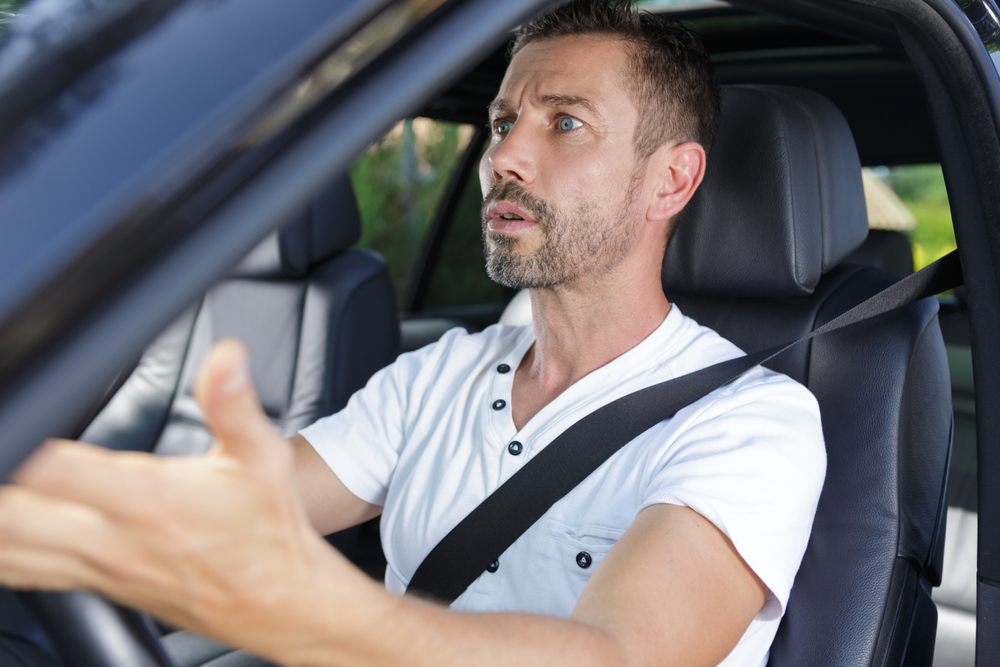
How Liability Works in a Failure-to-Yield Crash

How Fault Is Proven In A Failure-To-Yield Claim

To recover compensation in Nevada, you generally have to show that the other driver owed you a duty of care, breached it by failing to yield, and caused your injuries as a result. A traffic citation for the violation helps, but it is rarely the whole case on its own. The insurance company can still argue that you contributed to the crash.

Objective evidence is what settles a disputed right-of-way case, and the most useful proof often disappears within days.

Sources that tend to carry weight include:

  • The police report and any citations issued at the scene.
  • Independent witness statements from people who saw who stopped, who turned, and who had the green.
  • Dashcam video from your car or nearby vehicles, which can capture the signal phase and the moment of impact. Our guide to using dashcam footage as evidence in Nevada claims explains how it gets used.
  • Surveillance footage from nearby businesses, gas stations, or homes.
  • Vehicle event data recorder (EDR) information, which can show speed, braking, and steering in the seconds before the crash.
  • The location and angle of the damage, which a reconstruction expert can use to map how the vehicles met. Our explanation of fault determination based on damage location covers this.

Do Traffic Cameras Record Crashes?

Many drivers assume traffic cameras automatically record every crash, but that is generally not the case in Las Vegas. Most cameras at major intersections are live traffic monitoring feeds and are not recorded for later review.

That makes other evidence, such as dashcam footage or video from nearby businesses, much more valuable. Because video can be overwritten quickly, it is important to preserve it as soon as possible after a crash.

Get Your Free Consultation

Untitled
By contacting Gina Corena & Associates, you agree to receive emails, text messages, and phone calls regarding your legal inquiry, which may be considered advertising material.

When The Other Driver Shares Fault

Failure to yield does not automatically place all the blame on one driver. The driver with the right of way still has a duty to drive safely, and their own conduct can shift the fault percentages.

Common ways fault gets split include:

  • Speeding. If the car with the right-of-way was traveling well over the limit, it may have erased the safe gap the other driver reasonably relied on. Excessive speed can make that driver a partial cause of the crash.
  • Running a red light. A driver who blows through a red or late-yellow light may carry the majority of the fault, even if the other driver was turning or merging.
  • Distraction or impairment. A driver who was texting, drowsy, or impaired may share liability. Impaired driving can also open the door to additional claims; if a drunk driver was involved, our Las Vegas drunk driving accident lawyer page explains your options.
  • Driving without headlights at night can keep an approaching driver from judging the gap.

Because fault can be divided, every detail in the evidence matters. A clear record of the other driver’s speed or signal violation can move the percentages and change what you recover.

How Nevada’s Comparative Negligence Rule Affects Your Payout

Nevada follows modified comparative negligence under NRS 41.141. You can still recover compensation as long as you are not more than 50 percent at fault, and your recovery is reduced by your share of the blame. If you are found 51 percent or more at fault, you recover nothing.

Here is how that works in a failure-to-yield case. Suppose your damages total $100,000, and the insurer argues you pulled out too soon at a stop sign. If the evidence shows the other driver was speeding well over the limit, a jury might assign them 70 percent of the fault and you 30 percent. You would still recover, but your award would be reduced by 30 percent, leaving $70,000.

This is exactly why insurance companies fight so hard over fault percentages. Every point of blame they push onto you lowers what they pay. An adjuster who insists you were “automatically” responsible because you were the one turning or merging is often skipping the part where the other driver’s conduct shifts the numbers.

Nevada's Comparative Negligence Rule Affects Your Recovery

Damages And Deadlines In A Nevada Right-Of-Way Crash

If another driver’s failure to yield is established, the compensation available may include:

  • Past and future medical expenses
  • Lost wages and reduced earning capacity
  • Pain and suffering
  • Property damage to your vehicle
  • Other out-of-pocket losses tied to the crash

In Nevada, you generally have two years from the date of the crash to file a personal injury lawsuit, under NRS 11.190(4)(e). Insurance claims should begin much sooner, and they are often disputed when fault is unclear. Every case is different, so confirm your specific deadline with a lawyer rather than assuming.

Frequently Asked Questions

Who is usually at fault in a failure-to-yield accident in Nevada?

The driver who failed to give the right of way is usually at fault, because Nevada law spells out who must yield in each situation. That presumption can shift, though, if the other driver was speeding, ran a red light, or was otherwise breaking the rules.

Does a traffic ticket for failure to yield prove the other driver is liable?

A citation is strong evidence, but it does not automatically settle a civil claim. You still have to show the violation caused your injuries, and the insurance company can argue you shared some of the fault.

Can I still recover money if I was partly at fault?

Yes, as long as you were not more than 50 percent at fault. Under Nevada’s modified comparative negligence rule, your compensation is reduced by your percentage of fault, and at 51 percent or more, you recover nothing.

What if the driver who hit me had no insurance?

You may be able to use your own uninsured or underinsured motorist coverage. Our page on Nevada uninsured motorist coverage explains how that protection works.

How long do I have to file a claim after a failure-to-yield crash?

You generally have two years from the date of the crash to file a personal injury lawsuit in Nevada. Insurance claims should start much sooner, and deadlines can vary, so confirm yours with an attorney early.

Talk With A Las Vegas Failure-To-Yield Accident Lawyer

If a driver who should have yielded hurt you, do not let their insurer decide your case for you. The team at Gina Corena & Associates handles disputed right-of-way crashes across Nevada and can help you gather the evidence that shows who really had the right-of-way.

Call (702) 680-1111 any time, day or night, for a free consultation in English or Spanish. You pay no fee unless we win. You can also reach out through our contact page to get started.

Reviewed by Gina M. Corena, founding attorney at Gina Corena & Associates.

As founder of Gina Corena & Associates, she is dedicated to fighting for the rights of the people who suffer life-changing personal injuries in car, truck and motorcycle accidents as well as other types of personal injury. Gina feels fortunate to serve the Nevada community and hold wrongdoers accountable for their harm to her clients.


  • This was my first time using a lawyer, which I needed due a major car accident. They made everything simple and stress free, and I couldn’t be happier with the attentive care I received from everyone at the law office. Gresia was fantastic, and kept in touch regularly. She was professional, knowledgeable, and very kind. I would recommend them to anyone.

    - Deb Compton

  • Gina and her crew are truly amazing. They exceeded my expectations. They kept in contact with me throughout the whole time and any questions I did have They would take the time and explain everything so I would know what to expect. I would highly recommend them at any time.

    - Chris S

  • Thank you very much for the services everyone answered every single one of my calls and this firm took care of me from start to finish. Thank you so much Gina for taking on my case and assisting me I will recommend you to everyone.

    - Sayra Sánchez

  • I rarely do reviews but I want to share what an outstanding team Gina Corena has. Mahna Pourshaban did such an awesome job In helping us get our settlement, she has treated us like family since day 1 that we met her.. Me and my family want to tell u guys thank u from the bottom of our hearts.

    - The LOPEZ Family

  • Working with Gina was An amazing feeling as the client to know that my case is being handled professionally and to the best it can be ! Knowing that Gina can handle it gave me confidence and peace, 100 percent recommend Gina and her associates team !

    - Jonathan Rodriguez

  • GINA CORENA is the best attorney indeed! Thank you to her amazing team the attention to detail I received was incredible. 100% recommend to everyone!

    - Clara Maria

  • My experience with Gina Corena’s office was amazing. They were all professional and were easy to reach out to during my whole case. I’d recommend their services 10/10!!

    - Mark Surban

  • I'm really satisfied with the work these ladies provide. They’re Super reliable and Professional, Alexandra was the one that helped me with my case and she’s super nice and sweet. She made sure I was aware about all the updates with my case. Overall the work they provide to the citizens of Las Vegas is top notch. Thank you Gina Corena and associates.

    - Gil Axel

  • This is the best company I have dealt with hands down. I am super thankful with them for all the work they did on behalf of my case. The process was rather simple and very well explained from start to finish. Thank you so much Gina Corena &. Associates. Thank you Kim for assisting in my case.

    - Raidel Echavarria

  • I received nothing but top notch service from this firm not once but twice please keep up the outstanding job customer service is very important to me and your firm went above and beyond again THANK YOU

    - Freda Smith

  • Such a great law firm. This was my first time having to get a lawyer due to an auto accident and they explained all the ins and outs of my case and the process. I will definitively keep them in mind again for the future.

    -Alyssa Ortega

  • If I can give Gina’s firm 10 stars I would. They have the best customer service & most knowledgeable staff I’ve ever come across. The office is always clean and it has a lovely and positive vibe. Thank you to this amazing firm to make my experience fast and easy for me. Gina definitely knows how to care of her clients and treated me like family. I will recommended to my friends and family.

    -Cony Jordan

VIEW ALL

CALL US 24/7

Schedule A Free
Injury Consultation Below

    By contacting Gina Corena & Associates, you agree to receive emails, text messages, and phone calls regarding your legal inquiry, which may be considered advertising material.